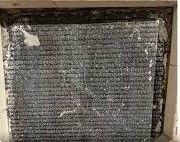
Prabhas Patan: Epigraphic Testimony to Somnath’s Enduring Sacred Legacy
Prabhas Patan occupies a unique place in India’s civilisational history, preserving centuries of religious devotion, royal patronage, and cultural continuity through its rich epigraphic heritage. Inscriptions, copper plates, and memorial stones found across the region—closely associated with the sacred Somnath Temple —offer valuable insights into Gujarat’s spiritual resilience and historical prosperity.
Inscriptions as Living Historical Records
Numerous stone inscriptions and architectural fragments are preserved at the Prabhas Patan Museum, presently housed within the ancient Sun Temple complex. These artefacts document the religious significance of the region and its repeated revival after invasions. A particularly notable inscription is located near the museum, close to the old Ram Temple in Bhadrakali Lane, embedded within the wall of the historic Bhadrakali Temple. This inscription is protected by the State Department of Archaeology and continues to draw scholarly attention.
The Bhadrakali Inscription of 1169 CE
As explained by museum officials, the Bhadrakali inscription dates to 1169 CE , corresponding to Valabhi Samvat 850 and Vikram Samvat 1255 . It is a eulogistic record dedicated to Param Pashupata Acharya Shriman Bhavabrihaspati, the revered spiritual guide of Kumarapala , a prominent ruler of the Solanki dynasty. The record offers a rare continuous narrative tracing the history of the Somnath shrine from ancient traditions into the medieval period.
Somnath Through the Ages
The inscription reflects the traditional belief that Somnath Mahadev was rebuilt in all four yugas. It records that in Satya Yuga , the temple was constructed in gold by Chandra (Soma); in Treta Yuga , Ravana rebuilt it in silver; in Dvapara Yuga , Shri Krishna reconstructed it using wood; and in Kali Yuga , a magnificent stone temple was raised by Bhimdev Solanki. Historical sources further confirm that Kumarapala oversaw the construction of a later temple on the same sacred site in 1169 CE, reinforcing continuity of worship.
Solanki Patronage and Gujarat’s Cultural Flourishing
During the rule of the Solanki dynasty , Prabhas Patan emerged as a thriving centre of religious learning, temple architecture, and literary activity. The reigns of Siddharaj Jaysinh and Kumarapala are often described as a golden phase, marked by just administration and deep patronage of Shaivism and Sanskrit scholarship. Epigraphs like the Bhadrakali inscription stand as enduring proof of this intellectual and spiritual vibrancy.
Key Exam-Focused Points
-
Prabhas Patan is historically linked with the Somnath Temple tradition.
-
The Bhadrakali inscription dates to 1169 CE (Valabhi Samvat 850, Vikram Samvat 1255).
-
The Solanki dynasty played a major role in temple construction and cultural patronage in Gujarat.
-
Valabhi Samvat and Vikram Samvat were important historical calendar systems.
-
Somnath is traditionally believed to have been rebuilt in all four yugas .
Month: Current Affairs - January 14, 2026
Category: Ancient & Medieval Indian History, Culture