Yet focusing solely on the Security Council risks missing half the picture. The UN is not only a crisis-management forum for great powers; it is also a vast institutional ecosystem that continues to function daily, often away from headlines.
The Secretariat supports peacekeeping missions, political mediation and conflict prevention. UN agencies coordinate humanitarian relief, public health campaigns, refugee protection and development assistance. Human rights bodies document abuses and sustain international scrutiny even when enforcement is absent. None of this prevents unilateral military action by powerful states, but much of it reduces suffering and preserves channels for diplomacy.
An uncomfortable but necessary conclusion
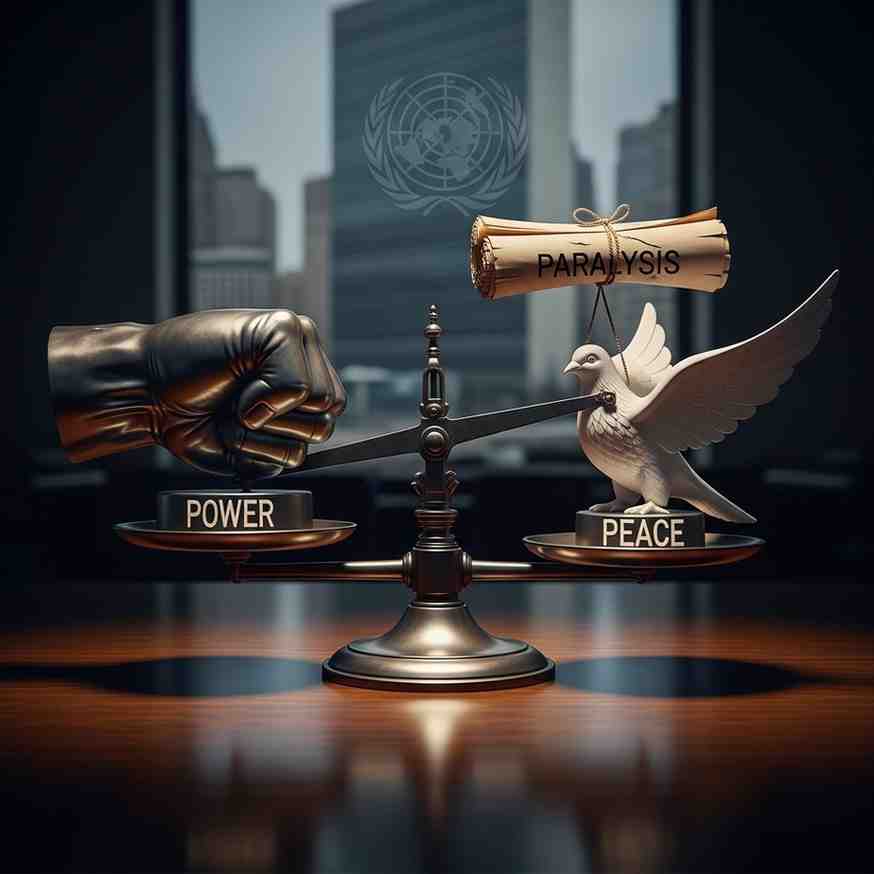
The Venezuelan episode, like Ukraine and Gaza, exposes a hard truth: the UN-led peace and security system cannot restrain its most powerful members. In that narrow but critical sense, it is failing — not by accident, but by design. The system was built to accommodate power, not to override it.
At the same time, abandoning the UN would mean discarding the only universal framework that coordinates humanitarian action, establishes global norms and provides a common diplomatic language. The real choice confronting the world is not between a perfect institution and a broken one, but between a deeply imperfect UN and no universal institution at all.
For now, the UN’s future may lie less in dramatic reform than in endurance: preserving what still works, containing damage where it cannot act, and waiting for political conditions in which collective restraint becomes possible again. In a world of power without trust, even a limited forum for dialogue may be better than none.
Month: Current Affairs - January 08, 2026
Category: