Overview
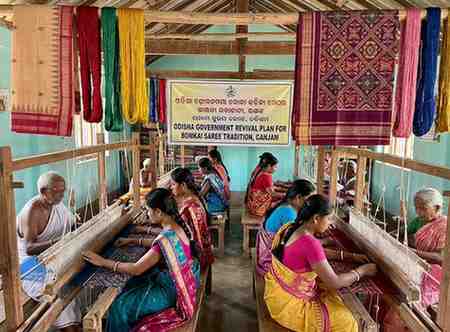
Odisha’s Handlooms, Textiles and Handicrafts department has launched a revival plan for the original Bomkai weaving tradition. The project is titled "Revival of Languishing Products (Cotton Bomkai Saree)". It was approved by the state government in the last financial year. The plan focuses on Bomkai village in Ganjam district, where only two families still practice the original craft. The project includes training new artisans, documenting traditional designs, and supporting weavers. Bomkai saree has a Geographical Indication (GI) tag and is a proud part of Odisha’s heritage.
Latest News: Revival Plan for Bomkai Saree
On 23 May 2026, news emerged about Odisha’s effort to save the original Bomkai weaving tradition. The state’s Handlooms, Textiles and Handicrafts department launched the revival project. It is called "Revival of Languishing Products (Cotton Bomkai Saree)". The government approved the plan in the previous financial year. The project aims to bring back the original designs and techniques of Bomkai weaving. A five-day orientation programme was recently conducted in Bomkai village. The department worked with the State Agency for Development of Handloom Clusters. The programme collected information about current weaving practices and the problems weavers face.
What Is Bomkai Weaving Tradition?
Bomkai is a handwoven cotton saree tradition. It is named after Bomkai village in Ganjam district, Odisha. The craft is also associated with Subarnapur, which is another centre of Bomkai weaving. The Bomkai saree is recognised under India’s Geographical Indication (GI) Act. This means only weavers from this region can call their product "Bomkai". The saree is known for its unique designs, rich borders, and traditional motifs. Original Bomkai weaving uses specific colours and patterns that have been passed down for generations.
Details of the Revival Plan
The revival plan has several important parts. First, it includes documentation of traditional designs, motifs, and colour specifications of original Bomkai weaves. Many old designs have been forgotten over time. The project will record them so they are not lost forever. Second, the plan includes training a new generation of artisans in the original weaving technique. Young people will learn from the few remaining master weavers. Third, the project will support existing weavers with materials, tools, and market access. The orientation programme in Bomkai village collected details of difficulties faced by current weavers. These problems will be addressed step by step.
Training Measures and Orientation Programme
A five-day orientation programme was held in Bomkai village. It was run by the department in coordination with the State Agency for Development of Handloom Clusters. During the programme, officials talked to weavers about their work. They noted the existing weaving practices. They also listened to the problems weavers face. These include lack of raw materials, low income, and competition from machine-made sarees. The programme helped build trust between the government and the weavers. It was the first step in a long-term revival effort.
Current Weavers: Only Two Families Left
As of 23 May 2026, only two weaving families in Bomkai village continue the original Bomkai tradition. These are the families of Keshab Nayak and Sushanta Kumar Nayak . These two families have kept the craft alive. But they are ageing. There are very few younger people in the village who know the original techniques. This is why the revival plan is urgent. The project plans to involve weavers from surrounding villages in Ganjam district. Since Bomkai village has a shortage of younger artisans, nearby weavers will be trained to continue the tradition.
Month: Current Affairs - May 23, 2026
Category: Art & Culture, Indian Heritage