Missile Activities.
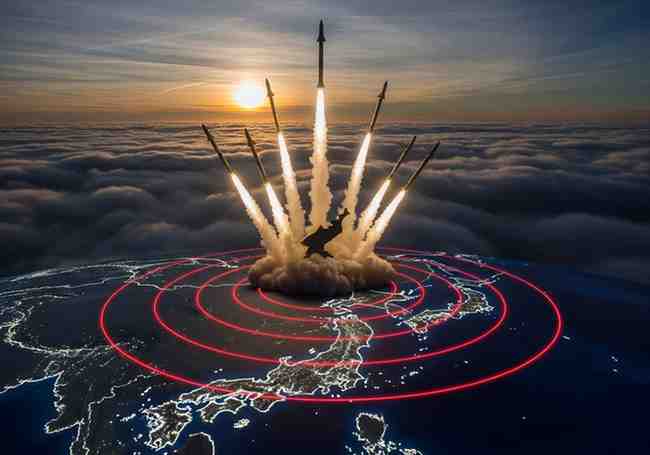
North Korea has argued that the recent missile tests were based on hi-tech weapons such as ballistic missiles which contained cluster-bomb warheads. The development was announced through the Korean Central News Agency, on April 9, 2026, after several launches were detected by South Korea, which indicated further military development at a time when regional tensions were rising.
Expanding Military Capabilities
The reported tests were over three days and had a combination of weapons systems which included short-range ballistic missiles, anti-aircraft systems, electromagnetic weapons and carbon-fibre-based munitions. Such initiatives are part of the wider initiative of modernising North Korean weaponry and enhancing its deterrence posture to the perceived threats.
Cluster Warheads and its effects.
One of the highlights of the tests is the alleged use of cluster-munition warheads. These weapons spread numerous submunitions in a broad area, extending their destructive capabilities with dispersed targets. North Korea asserted that with such warheads attached to its Hwasong-11 missiles, some hectares would be covered, and this would greatly increase their impact in the battlefield.
Local Surveillance and Reactions.
South Korea claimed that the missiles had a range of between 240 and 700 kilometres and landed in the sea. Japan affirmed that none had entered its exclusive economic zone and the United States declared that the tests did not present any imminent danger to its territory or allies. But the launches have increased the alertness in the region.
Exam-Focused Key Points
- Hwasong-11: short-range ballistic missile of North Korea.
- Cluster munitions spread several submunitions in a vast region.
- Blastic missiles are parabolic and can be equipped with nuclear warheads.
- The official state media in North Korea is KCNA.
- Reported range of missiles: 240-700 km.
Geopolitical Implications
The tests point to unremitting tensions within the Korean Peninsula. North Korea has not been engaging in any diplomatic ties with the United States since 2019, which has driven Pyongyang to speed up the creation of weapons. Meanwhile, North Korea is still enhancing its relationships with China and Russia, influencing the geopolitical processes in the region.
Month: Current Affairs - April 09, 2026
Category: Nuclear and Missile Technology