India’s New Aviation Hub: Noida Airport Phase I Explained
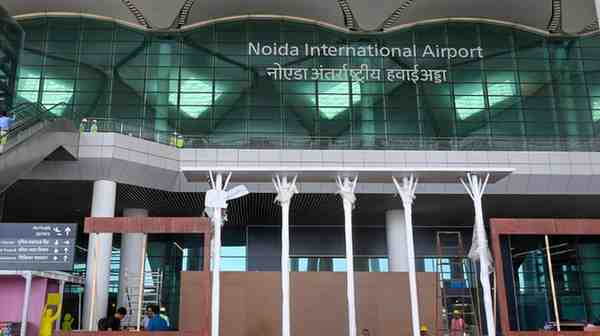
Prime Minister Narendra Modi inaugurated Phase I of the Noida International Airport, marking a major step in expanding India’s aviation infrastructure and easing congestion in the Delhi-NCR region.
Strategic Importance and Connectivity
Located along the Yamuna Expressway in Gautam Buddha Nagar, the airport is designed to complement Indira Gandhi International Airport. The dual-airport system will distribute passenger traffic more efficiently, improve operational capacity and enhance regional as well as global connectivity. Its strategic location ensures seamless access for Delhi, Noida, Greater Noida and surrounding areas.
Regulatory Approval and Operations
The airport has received aerodrome certification from the Directorate General of Civil Aviation, allowing it to operate under the public-use category. Equipped with advanced systems such as Instrument Landing System (ILS) and modern airfield lighting, the facility supports safe and efficient all-weather, round-the-clock operations.
Infrastructure and Capacity
Phase I has been developed at an estimated cost of ₹11,200 crore. It includes a 3,900-metre runway capable of handling wide-body aircraft. The airport has an initial capacity of 12 million passengers per annum (MPPA), scalable up to 70 MPPA in later phases. The project is being executed under a Public-Private Partnership model by Yamuna International Airport Private Limited, a subsidiary of Zurich Airport International AG.
Sustainable Design and Future Vision
The airport has been planned as a net-zero emissions facility, incorporating energy-efficient technologies and sustainable construction practices. Its architectural design draws inspiration from Indian heritage elements such as ghats and havelis, combining cultural aesthetics with modern infrastructure. The project reflects India’s long-term vision of building environmentally responsible and high-capacity aviation hubs.
Exam-Focused Points
-
Noida International Airport located at Jewar (Uttar Pradesh)
-
Developed under PPP model by YIAPL
-
Initial capacity: 12 MPPA (expandable to 70 MPPA)
-
Runway length: 3,900 metres (wide-body aircraft capable)
-
Certified by DGCA for public use
-
Designed as a net-zero emissions airport
Month: Current Affairs - March 28, 2026
Category: Infrastructure, Transport