Rare “Dinosaur Vomit” Fossil Reveals 100-Million-Year-Old Flying Reptile
Scientists have identified a new species of flying reptile from an unusual fossil source— fossilised regurgitated material , often called “dinosaur vomit.” The specimen, estimated to be about 100 million years old , was recovered from the Araripe Basin in Brazil . The species has been named Bakiribu waridza and represents the first extinct animal scientifically described entirely from fossilised regurgitate .
Rare Fossil Discovery in Brazil
The remains were found in the Romualdo Formation , part of the Santana Group . This region is renowned for exceptionally preserved fossils dating back to the Cretaceous period.
Researchers discovered bones from two individuals of the pterosaur along with four fossilised fish embedded in the regurgitated mass. The study describing the discovery was published in the journal Scientific Reports , highlighting a rare type of fossil preservation rarely encountered in palaeontology.
Preservation Through Fossilised Regurgitate
The remains of Bakiribu waridza were not fossilised in sediment as usual. Instead, they were preserved in material expelled by a predator.
Scientists believe the predator partially digested the prey but expelled the bones before they could dissolve completely. These fossilised regurgitates are known as regurgitalites , which provide valuable evidence of ancient predator–prey interactions and prehistoric food webs.
Clues About Prehistoric Feeding Behaviour
Researchers suspect that a large Spinosaurid dinosaur may have eaten the flying reptile and later regurgitated the remains. The fish fossils found alongside the bones were aligned head-first , a pattern also seen in modern fish-eating birds.
This orientation helps predators swallow prey more easily by preventing fins from getting stuck in the throat. The arrangement preserved in the fossil offers rare insight into feeding strategies in ancient ecosystems .
Unique Filter-Feeding Adaptation
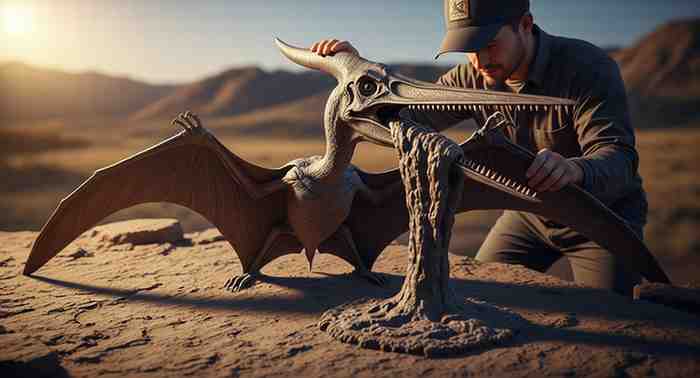
The newly identified pterosaur had a distinctive mouth structure lined with hundreds of thin, comb-like teeth . This feature suggests it likely used a filter-feeding method , similar to the feeding strategy of modern flamingos.
By filtering small organisms from shallow water, Bakiribu waridza could occupy a specialised ecological niche and avoid competition with larger predators in the tropical environment of prehistoric Brazil.
Exam-Focused Points
-
Pterosaurs were flying reptiles that lived alongside dinosaurs but were not dinosaurs themselves.
-
The Araripe Basin is one of the world’s most important Cretaceous fossil sites .
-
The Cretaceous Period lasted from about 145 million to 66 million years ago .
-
Regurgitalites are fossilised remains of material expelled by ancient predators.
-
Spinosaurid dinosaurs were large carnivores adapted for catching fish.
Month: Current Affairs - March 14, 2026
Category: Science & Technology