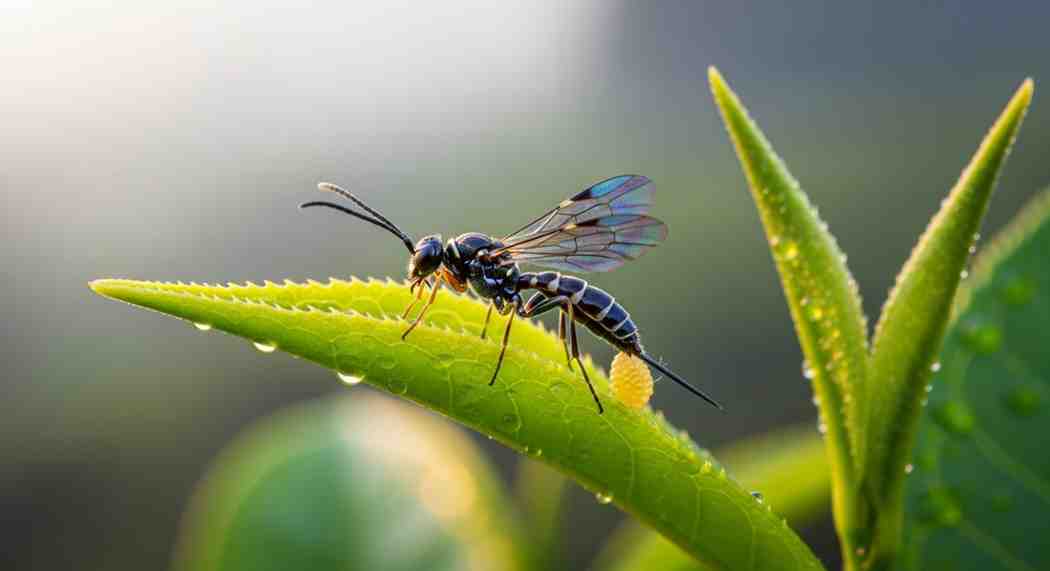
Scientists Identify Rare Chelonus Wasp in Northeast India
Scientists have discovered a rare parasitic wasp species from a tea plantation in Assam , highlighting the rich but underexplored biodiversity of plantation ecosystems. The research was carried out by scientists from the Zoological Survey of India , the Centre for Biodiversity Genomics , and the Kalinga Foundation .
The newly identified species, Chelonus (Carinichelonus) mahadeb , was recorded from Nahortoli Tea Estate . During the same study, researchers also documented Chelonus siangensis in Chubwa Tea Estate , expanding the known range of the species beyond Arunachal Pradesh .
Discovery within a Rare Wasp Group
The study focused on the rare subgenus Carinichelonus , part of the Braconidae . Species belonging to this group are extremely uncommon and poorly documented globally.
The identification of Chelonus (Carinichelonus) mahadeb adds to scientific knowledge about parasitoid insects and expands the inventory of India’s insect biodiversity.
Ecological Role of Parasitic Wasps
Members of the genus Chelonus are known as egg–larval parasitoids . They deposit their eggs inside the eggs of other insects, mainly moths and butterflies. After hatching, the developing wasp larvae feed on the host insect and eventually kill it.
Because many moth larvae damage crops, these wasps act as natural pest regulators. Their presence in agricultural ecosystems can help control pest populations without relying heavily on chemical pesticides.
Importance for Agriculture and Biodiversity
Tea plantations may appear to be monoculture landscapes, but they often support complex ecological communities of insects, spiders, and birds. Beneficial insects such as parasitoid wasps contribute to maintaining ecological balance by controlling pest species naturally.
The discovery in Assam highlights the role of agricultural landscapes as potential reservoirs of biodiversity.
Tea Plantations as Biodiversity Refuges
The tea-growing areas of the Brahmaputra Valley are increasingly recognised for their ecological importance. Scientists have documented numerous species of butterflies, birds, and arthropods in these plantations.
However, many insect groups—particularly parasitoid wasps—remain poorly studied because of their tiny size and the specialised expertise required for identification. The discovery of Chelonus (Carinichelonus) mahadeb suggests that many more species may still await discovery in the ecosystems of Northeast India.
Exam-Focused Points
-
Braconidae contains species widely used in biological pest control .
-
Parasitoids differ from parasites because they eventually kill their host .
-
The Eastern Himalayas is recognised as a major centre of biodiversity.
-
Tea plantations in Northeast India support diverse insects, birds, and arthropods .
-
Biodiversity studies help identify beneficial species important for sustainable agriculture .
Month: Current Affairs - March 14, 2026
Category: Environment & Ecology / Biodiversity