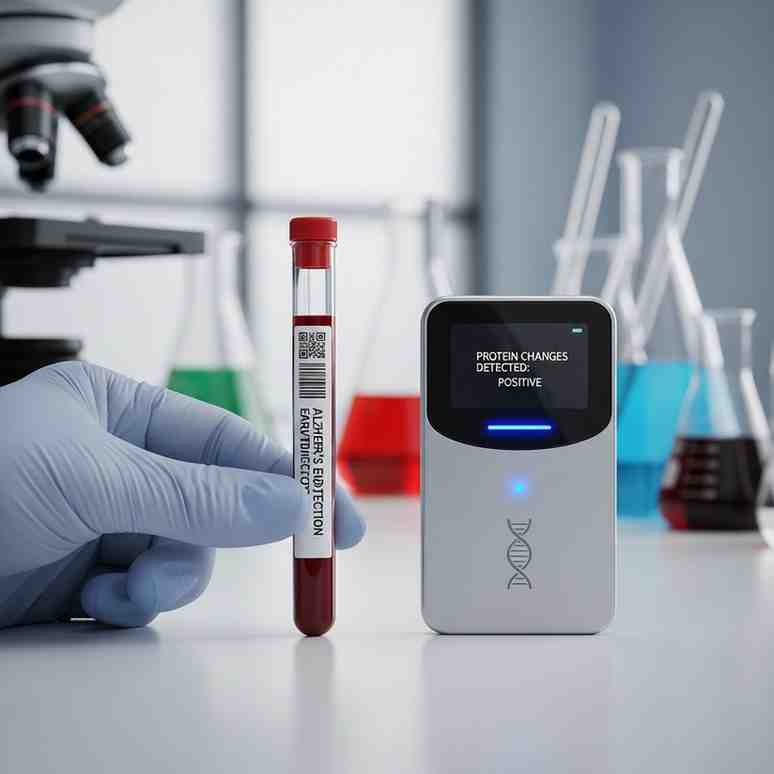
Proteostasis-Based Diagnosis Offers Breakthrough in Alzheimer’s Detection
A recent study published in Nature Aging has introduced a novel blood test for early detection of Alzheimer’s disease. The approach focuses on structural changes in plasma proteins rather than their concentration, offering a more sensitive diagnostic pathway.
Innovative Approach to Alzheimer’s Diagnosis
Unlike traditional methods that detect amyloid plaques and tau tangles in the brain, this technique analyses how amino acids fold within blood proteins. Researchers examined plasma samples from over 500 individuals and identified unique structural patterns linked to Alzheimer’s and mild cognitive impairment, enabling early identification.
Role of Proteostasis in Disease Progression
The study is grounded in the concept of proteostasis, which ensures proper protein folding and removal of damaged proteins. With ageing, this system weakens, leading to misfolded proteins that contribute to neurodegenerative disorders, including Alzheimer’s.
Key Protein Markers Identified
Researchers identified three important protein markers: C1QA (immune signalling), clusterin (involved in protein folding and amyloid clearance), and apolipoprotein B (linked to vascular health). Advanced machine learning models were used to detect structural variations, accurately distinguishing between healthy individuals and those at different disease stages.
Implications for Early Detection and Treatment
This method offers a promising tool for early diagnosis, which is critical for timely intervention and improved treatment outcomes. It may also enhance clinical trials by identifying patients in early stages, potentially accelerating the development of effective therapies.
Exam-Focused Points
-
Study published in Nature Aging .
-
Focus: protein structure (not quantity) .
-
Concept: Proteostasis (protein folding system) .
-
Key proteins: C1QA, Clusterin, Apolipoprotein B .
-
Uses machine learning in diagnostics .
-
Enables early detection of Alzheimer’s disease .
Month: Current Affairs - March 22, 2026
Category: Science - Technology, Health