Overview :
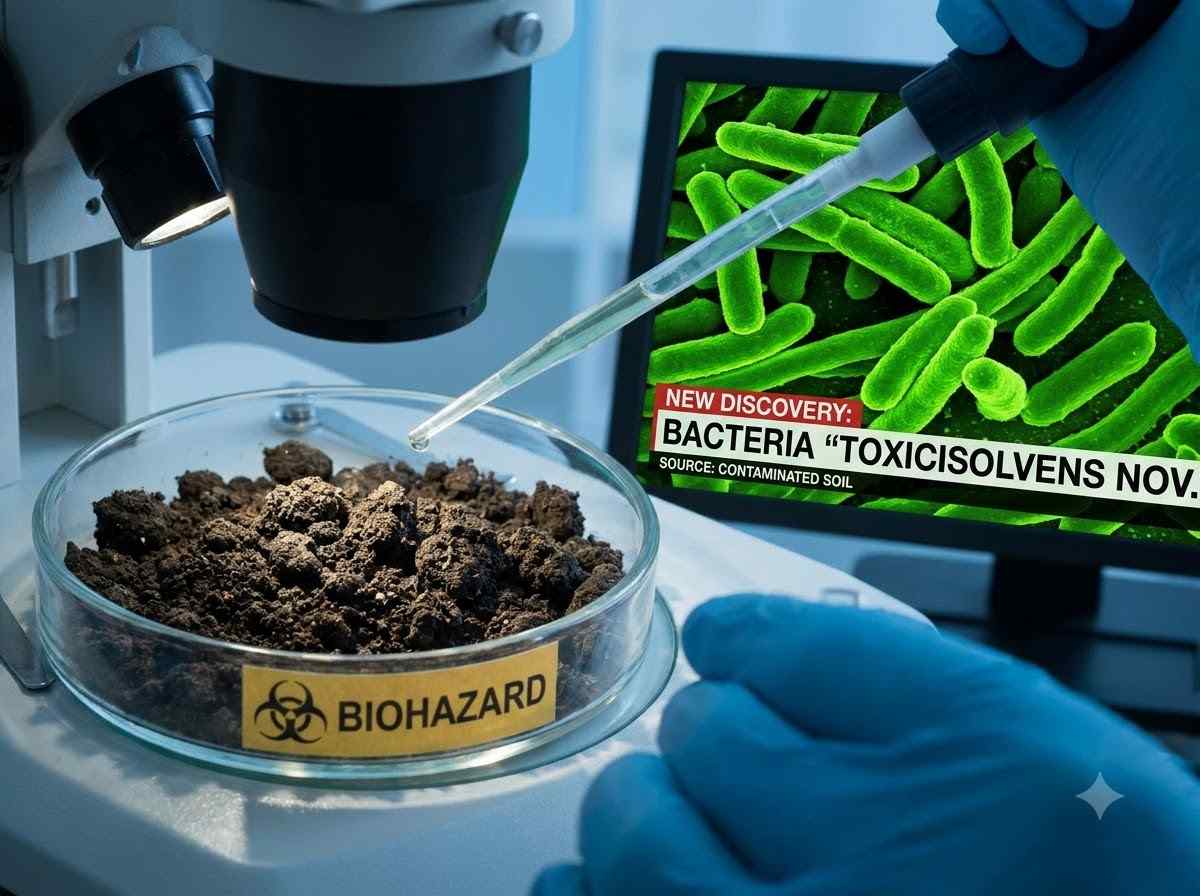
Indian researchers discovered Microbacterium pollutisoli, a new bacterial species, in the toxic soil of a banned pesticide (HCH) dumpsite in Uttar Pradesh. The bacteria forms yellow colonies, survives extreme temperatures (12-46°C) and alkaline conditions, and produces valuable compounds like carotenoids and ectoine.
Understanding the Discovery
Think of Microbacterium pollutisoli as a survivor in extreme conditions. It thrives in toxic soil where most organisms would perish. Its survival mechanisms—shiny yellow colonies, short rod shape, temperature resilience—reflect its adaptability.
The Pesticide Connection
The bacteria was found in soil contaminated with Hexachlorocyclohexane (HCH), a banned pesticide. This suggests the bacteria has evolved to tolerate and possibly break down these pollutants, making it a potential candidate for bioremediation.
Biosynthetic Gene Clusters
These are like factory blueprints within the bacteria's DNA. They allow the bacteria to produce:
-
Carotenoids Natural pigments used in vitamins
-
Ectoine Protects cells from stress
-
Beta-lactones Antibacterial and potentially anti-cancer compounds
Why This Discovery Matters
-
Bioremediation potential Could help clean up pesticide-contaminated sites
-
Industrial applications Production of natural pigments and cell-protective compounds
-
Pharmaceutical potential Beta-lactones studied for antibacterial and anti-cancer properties
The Indian Context
This discovery by Indian researchers highlights the country's growing microbiological research capabilities. It also underscores the persistent environmental contamination from banned pesticides.
Extremophile Significance
Bacteria capable of surviving in extreme conditions often possess unique biochemical pathways that can be harnessed for industrial or environmental applications.
Exam-Focused Points :
-
Species Microbacterium pollutisoli (new bacterial species)
-
Location Toxic soil of banned Hexachlorocyclohexane (HCH) pesticide dumpsite, Uttar Pradesh
-
Name origin Latin: pollutus (contaminated) + solum (soil)—"Microbacterium of polluted soil"
-
Appearance Shiny yellow circular colonies; short rod-shaped
-
Survival range 12°C to 46°C; highly alkaline conditions
-
Genomic features Contains biosynthetic gene clusters producing carotenoids, ectoine, beta-lactones
-
Potential applications Natural pigments (vitamins), cell-protective compounds, antibacterial/anti-cancer agents
FAQs :
Q1: What is Microbacterium pollutisoli?
A new species of bacteria discovered in contaminated soil from a pesticide dumpsite.
Q2: What does its name mean?
From Latin: pollutus (contaminated) + solum (soil)—"Microbacterium of polluted soil."
Q3: Where was it discovered?
In Uttar Pradesh, in soil contaminated with the banned pesticide Hexachlorocyclohexane (HCH).
Q4: What are biosynthetic gene clusters?
Sets of DNA instructions that allow bacteria to produce valuable compounds like pigments and protective substances.
Q5: What valuable compounds can it produce?
Carotenoids (natural pigments/vitamins), ectoine (cell protectant), and beta-lactones (antibacterial/anti-cancer potential).
Month: Current Affairs - Aug 10, 2026
Category: Scientific Discoveries