Overview
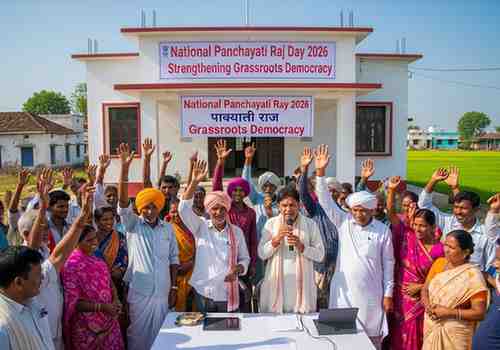
In India, a day of decentralised governance and grassroots democracy is celebrated on the 24th of April each year, the National Panchayati Raj Day. The day is celebrated because of the enactment in 1992 of the 73 rd Constitutional Amendment Act, 1992 that came into effect in 1993, giving constitutional status to Panchayati Raj Institutions (PRIs). The theme 2026, Sashakt Panchayat, Sarvangeen Vikas, emphasizes the contribution of empowered local bodies in ensuring inclusive development.
History and Constitutional Importance.
Panchayati Raj is based on the ancient village assemblies. Nevertheless, it was formally recognized with the 73rd Amendment that added Part IX (Articles 243243O) and the Eleventh Schedule to the Constitution. This reform institutionalised local self-government and established Panchayats as a compulsory system of three levels across the states, with democratic participation by the grassroots level.
Three-level System of Panchayati Raj.
he system works based on:
- Gram Panchayat (village level)
- Panchayat Samiti (block/middle level)
- Zilla Parishad (district level)
This organization provides proper planning, implementation and monitoring of the rural development programmes at various administrative levels.
Inclusive Development Role.
The institutions of Panchayati Raj encourage social inclusion and participatory government. Reserving Women, Scheduled Castes and Scheduled Tribes has enhanced representation and leadership in the local government. These institutions are important in the implementation of welfare schemes, enhancement of infrastructure, and the Sustainable Development Goals (SDGs).
Digital Governance and New Initiatives.
Programs such as e-GramSwaraj have increased transparency, real-time monitoring and accountability in the functioning of Panchayats. Rural governance is becoming more accessible and efficient with the help of digital transformation.
Exam-Focused Points
- Date: April 24
- Constitutional Ground: 73 rd Amendment Act, 1992 (enforced in 1993)
- Organization: triple system (Gram, Block, District)
- Theme 2026: Sashakt Panchayat, Sarvangeen Vikas.
- Goal: Enhance grassroots democracy and local government.
MCQ
Q. What was the Constitutional Amendment that made Panchayati Raj Institutions constitutional?
A. 42nd Amendment
B. 44th Amendment
C. 73rd Amendment
D. 86th Amendment
Answer: C
Rationale: The Panchayati Raj Institutions were given constitutional status under the 73 rd Constitutional Amendment Act, 1992, creating a three-level system of local government in rural India.
Month: Current Affairs - Apr 24, 2026
Category: Governance | Rural Development.