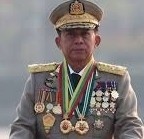
Military Leader Becomes President of Myanmar
Min Aung Hlaing has been elected as the President of Myanmar, formalising his control over the country after the 2021 military coup. He secured 429 out of 584 votes in parliament, reflecting the dominance of military-backed representatives in the political system.
Continuity of Military Influence
Although Min Aung Hlaing stepped down as commander-in-chief as required by the constitution, real power remains within the military. His close associate, Gen. Ye Win Oo, has taken over the armed forces leadership. This ensures that the military continues to control both political and defence institutions, maintaining its strong influence.
Concerns Over Electoral Process
The presidential election followed polls conducted under military supervision in 2025–26. Major opposition groups, including the National League for Democracy, either boycotted or were prevented from participating. The continued detention of Aung San Suu Kyi has further raised concerns about fairness and legitimacy.
Political and Security Situation
Myanmar remains unstable, with ongoing conflict between the military, pro-democracy groups, and ethnic armed organisations. The change in leadership title is unlikely to improve the situation, as key demands for democratic governance and reconciliation remain unaddressed.
Exam-Focused Points
- Min Aung Hlaing led the 2021 military coup in Myanmar
- Elected President with 429/584 votes
- Constitution separates military chief and president roles
- NLD was the main civilian party before the coup
- Aung San Suu Kyi remains detained
Regional and Global Significance
The development shows how military regimes can use formal political processes to maintain control. Myanmar’s situation is important for understanding democratic backsliding, civil-military relations, and regional stability in Southeast Asia. Despite institutional changes, actual power continues to rest with the military establishment.
Month: Current Affairs - April 03, 2026
Category: International Relations