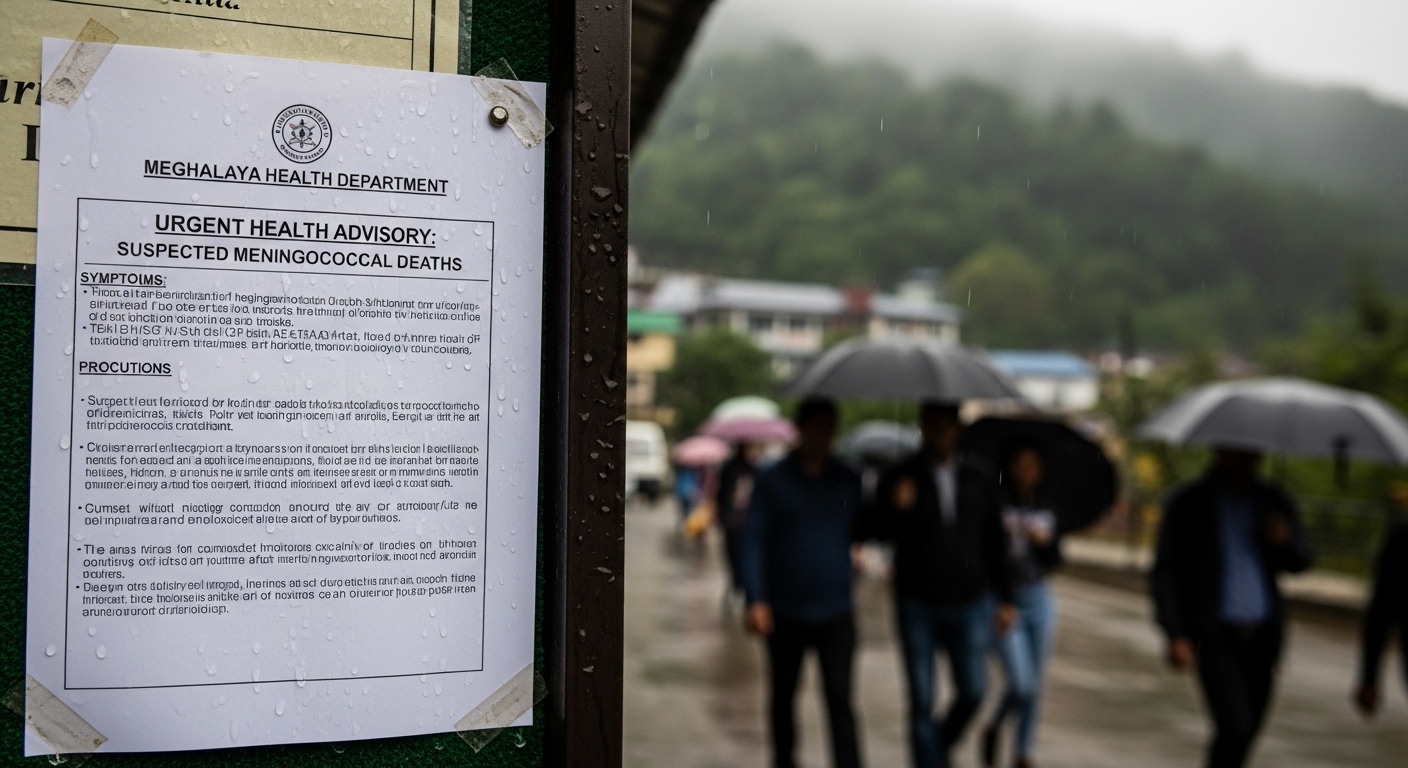
Meghalaya Issues Public Health Advisory After Suspected Meningococcal Infections
The Government of Meghalaya has issued a public health advisory following the suspected deaths of two Agniveer trainees due to meningococcal infection at the Assam Regimental Centre . Over 30 trainees are currently under medical observation, while individuals who had close contact with the affected cases have been placed in quarantine as a precautionary measure. Officials have confirmed that no additional suspected cases have been identified and the situation remains under close supervision by both civil and military health authorities.
Surveillance and Preventive Measures
The advisory, issued by the state's Health and Family Welfare Department , stated that the East Khasi Hills District Surveillance Unit has initiated a detailed epidemiological assessment. The comprehensive response includes case investigation, contact tracing, laboratory testing, and strengthened disease surveillance across the affected area. Military authorities have isolated close contacts at the Military Hospital in Shillong , with preventive measures such as mandatory masking and movement restrictions remaining in place within the training facility. Civil and military health agencies are maintaining close coordination to ensure any potential transmission is rapidly contained.
Understanding Meningococcal Infection
Meningococcal disease is caused by the bacterium Neisseria meningitidis . It can manifest as meningitis —inflammation of the membranes surrounding the brain and spinal cord—or meningococcemia , a severe bloodstream infection. The disease is known for its rapid progression and can become life-threatening within hours if left untreated. Immediate medical attention and prompt antibiotic therapy are essential for effective treatment. Vaccination offers reliable protection against several major meningococcal strains and is particularly important in crowded living environments such as hostels, military barracks, and training centres where transmission risk is elevated.
Symptoms and Public Guidance
Health authorities have advised the public to avoid crowded locations, maintain respiratory hygiene , and wear masks in congested spaces. Regular handwashing and sanitation practices have also been strongly recommended. Residents are urged to seek urgent medical care if they experience symptoms including:
-
Sudden high fever
-
Severe headache
-
Vomiting
-
Stiff neck
-
Rapidly spreading purplish rash
-
Pale extremities or signs of shock
The incident highlights the critical importance of early detection, rapid medical intervention, and coordinated surveillance in preventing infectious disease outbreaks within closed community settings.
Exam-Focused Important Facts:
-
Causative Agent: Meningococcal disease is caused by the bacterium Neisseria meningitidis .
-
Transmission: Spreads through respiratory droplets and close contact .
-
Key Symptoms: Include high fever, neck stiffness, and a non-blanching rash .
-
Month: Current Affairs - March 04, 2026
Category: Health & Disease (Infectious Diseases)