Stone Inscription Reveals Gajapathi Dynasty Links Between Odisha and Andhra
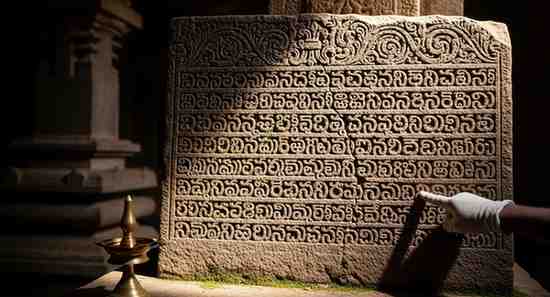
A medieval Telugu inscription associated with the Gajapathi dynasty has been identified on a stone pillar at the Lakshmi Narasimha Swamy Temple located in Guntur . The inscription provides important historical evidence about the political and cultural interactions between Odisha and coastal Andhra during the late medieval period. Historians believe the record highlights the administrative presence and religious patronage of the Gajapathi rulers in regions that are now part of Andhra Pradesh .
Reference to Gajapathi King Purushottama Deva
According to epigraphist Bishnu Mohan Adhikari , the inscription is carved on both sides of a stone pillar within the temple mandapa. The text mentions Purushottama Deva , a prominent ruler of the Gajapathi kingdom who governed during the fifteenth century CE.
The inscription refers to an official named Kumaraguru Mahapatra , described as a steward serving the king. This reference indicates that the Gajapathi administration maintained a network of officers overseeing religious and administrative affairs across parts of the Andhra region.
Temple Pillars Linked to Kondaveedu Fort
Local temple traditions indicate that the idol of Lord Narasimha at the Guntur temple was relocated from Kondaveedu Fort following medieval invasions in the region. According to temple priest Nadyala Yoganand , the stone pillars used in the temple mandapa were also brought from Kondaveedu.
Interestingly, the Narasimha temple at Kondaveedu contains another inscription in the Odia language associated with the Gajapathi rulers, which records temple donations and ritual practices.
Details About Temple Rituals and Cattle Care
The Guntur inscription originally referred to worship at the shrine of Mulasthana Mallikarjuna Temple before the mandapa structure was relocated. It instructs that milk offerings be made to the deity during evening rituals.
The record also specifies that cows used for temple rituals should remain under the supervision of designated groups such as the Tammula and Ambicvaru communities, who may have been pastoral groups responsible for maintaining cattle for temple services. The mention of Kumaraguru Mahapatra appears in inscriptions from regions such as Ganjam district and Visakhapatnam district , suggesting a broader administrative network.
Cultural Links Between Odisha and Andhra
Researchers note that inscriptions from both Kondaveedu and Guntur demonstrate the Hari-Hara worship promoted by the Gajapathi rulers. The dynasty supported both Shaiva and Vaishnava religious traditions, contributing to temple development across their territories.
Such epigraphic discoveries provide historians with valuable insights into medieval political control, cultural exchanges and religious patronage between Odisha and the Andhra region.
Exam-Focused Points
-
The Gajapathi dynasty ruled large parts of Odisha and coastal Andhra Pradesh during the medieval period.
-
Purushottama Deva was an important ruler of the Gajapathi kingdom.
-
Kondaveedu Fort served as a major political centre in medieval Andhra.
-
Month: Current Affairs - March 16, 2026
Category: Indian History-Epigraphy