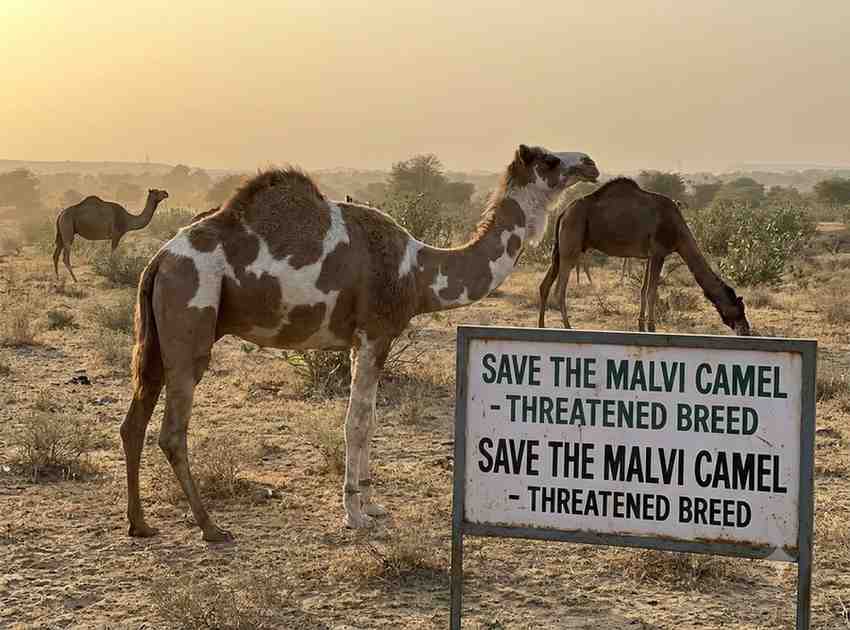
Overview :
NRCC launched conservation for Malvi camels facing extinction. This breed, one of India's nine camel types, yields 4-5 kg milk per cycle. Found in Madhya Pradesh's Malwa region and parts of Rajasthan, these smallest camels serve transport and agricultural needs across semi-arid areas.
Exam-Focused Points :
-
Breed Status : One of nine recognised camel breeds in India—facing extinction threat.
-
Primary Region : Malwa region of Madhya Pradesh (Mandsaur, Neemuch, Ratlam, Gwalior) and Rajasthan (Kota, Bundi, Jhalawar, Baran).
-
Milk Production : Females produce 4-5 kg milk per cycle—valued locally for nutrition.
-
Physical Traits : Smallest among Indian camel breeds with distinct white/light brown coat and robust build.
-
Adaptability : Thrives in semi-arid and humid conditions—unlike desert camel breeds.
-
Utility : Known for endurance, load-carrying, transport, and agricultural work.
-
Conservation Body : National Research Centre on Camel (NRCC) leads the protection initiative.
FAQs :
Q1: How many camel breeds does India recognise?
A: Nine breeds. Malvi is one of them.
Q2: Where does the Malvi camel primarily live?
A: Malwa region of MP and adjoining Rajasthan districts.
Q3: Why are Malvi camels valuable?
A: Milk production (4-5 kg per cycle) and transport/agricultural work.
Q4: Who is conserving this breed?
A: National Research Centre on Camel (NRCC) initiated the conservation drive.
Q5: What makes Malvi physically distinct?
A: Smallest breed with white/light brown coat and a well-developed hump.
Month: Current Affairs - Jul 29, 2026
Category: Biodiversity