Qasmiyeh Bridge Strike Highlights Importance of Litani River
Recent Israeli airstrikes have destroyed the Qasmiyeh Bridge over the Litani River, a key transport link in southern Lebanon. The incident has drawn attention to the river’s strategic, economic and ecological importance in the region.
Geographical Course of Litani River
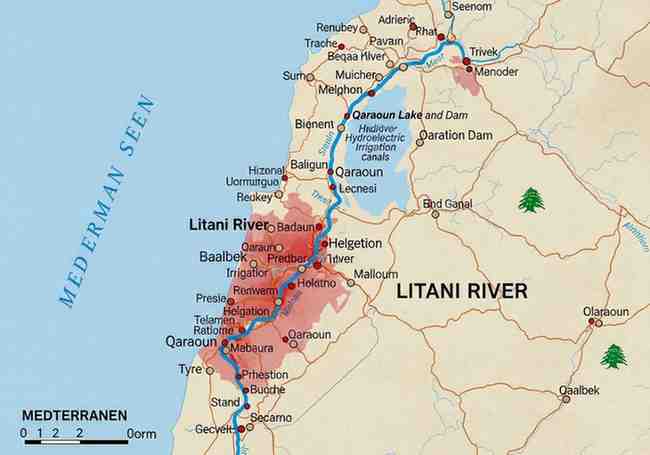
The Litani River is the longest river entirely within Lebanon. It originates near Baalbek and flows southwest through the fertile Bekaa Valley, located between the Lebanon and Anti-Lebanon mountain ranges. Near Marjayoun, it turns westward, cutting through mountainous terrain before draining into the Mediterranean Sea south of Sidon.
Tributaries and Infrastructure
The river system is supported by tributaries such as the Berdawni, Chtoura and Qib Elias. It also hosts major hydraulic structures like the Qaraoun Dam (Albert Naqash Dam), which plays a vital role in water storage, irrigation and hydroelectric power generation. These installations are essential for sustaining southern Lebanon’s water and energy needs.
Economic and Strategic Significance
The Litani River is central to Lebanon’s agricultural and water systems. It irrigates large parts of the Bekaa Valley, one of the country’s primary farming regions. Additionally, it contributes to hydroelectric power generation, making it crucial for energy security. Infrastructure along the river, such as bridges and dams, also holds strategic importance during conflicts.
Key Facts about Bekaa Valley
The Bekaa Valley is an intermontane basin stretching northeast to southwest in eastern Lebanon. It lies between two major mountain ranges and is drained by both the Litani and Orontes rivers. Despite limited rainfall, it accounts for nearly half of Lebanon’s cultivable land, making it agriculturally significant.
Exam-Focused Points
-
Longest river entirely in Lebanon: Litani River
-
Origin: Near Baalbek
-
Mouth: Mediterranean Sea (south of Sidon)
-
Key dam: Qaraoun Dam (Albert Naqash Dam)
-
Valley: Bekaa Valley (major agricultural zone)
-
Importance: Irrigation, hydropower, strategic connectivity
Month: Current Affairs - March 25, 2026
Category: International Relations