Overview :
L. Murugan resigns as Union Minister of State and Rajya Sabha member on 13 October 2026. Read the political background and key constitutional facts.
L. Murugan Resigns as Union Minister
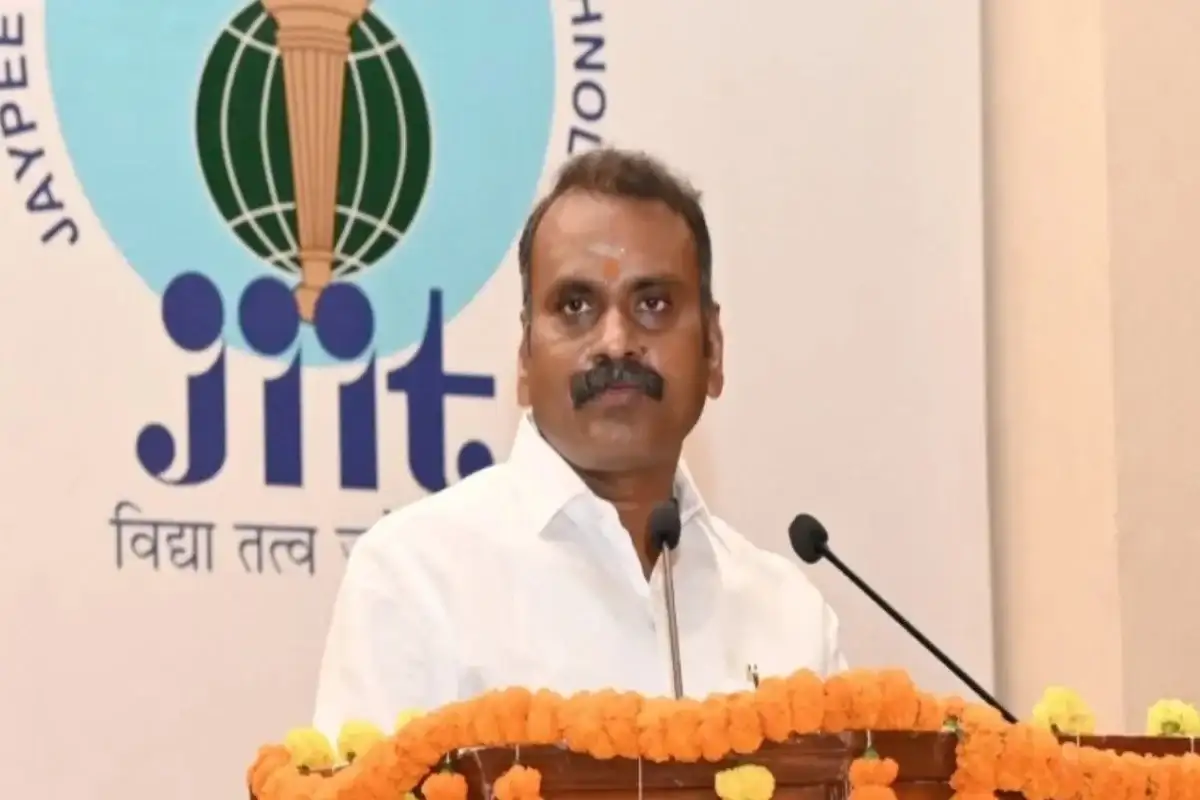
L. Murugan resigned as Union Minister of State and gave up his Rajya Sabha membership on 13 October 2026. He represented Madhya Pradesh in the Upper House. He said he wanted to return to Tamil Nadu and strengthen the Bharatiya Janata Party (BJP) ahead of the 2029 Lok Sabha elections.
Why Did L. Murugan Resign?
L. Murugan sent his resignation letter to Prime Minister Narendra Modi. He held the portfolios of Information and Broadcasting and Parliamentary Affairs as a Minister of State. He said he wanted to focus on strengthening the BJP in Tamil Nadu before the 2029 general elections.
Rajya Sabha Membership
The Rajya Sabha is the upper house of the Indian Parliament. It represents the states and Union Territories. It is a permanent House, so Parliament does not dissolve it. Members serve six-year terms, and one-third of them retire every two years.
Murugan represented Madhya Pradesh. His Rajya Sabha term was due to end in April 2030.
Constitutional Provisions
Article 75 of the Constitution deals with the appointment of Union ministers. The President appoints ministers on the advice of the Prime Minister. Article 75(3) states that the Union Council of Ministers remains collectively responsible to the Lok Sabha.
Article 101(3)(b) deals with a parliamentary seat becoming vacant after the presiding officer accepts a member’s resignation.
Political Background
Murugan previously served as president of the BJP’s Tamil Nadu unit. He is a leader from the Arunthathiyar community. His resignation came after the reported departures of Ministers of State George Kurian and Ravneet Singh Bittu, whose Rajya Sabha terms had ended.
Exam-Focused Points :
-
Name: L. Murugan.
-
Resignation date: 13 October 2026.
-
Former portfolios: Information and Broadcasting; Parliamentary Affairs.
-
Rajya Sabha state: Madhya Pradesh.
-
Expected end of term: April 2030.
-
Article 75(3): Provides for the collective responsibility of the Union Council of Ministers to the Lok Sabha.
-
Article 101(3)(b): Deals with a parliamentary seat becoming vacant after acceptance of a member’s resignation.
FAQs :
Q1. When did L. Murugan resign?
He resigned on 13 October 2026.
Q2. Which state did he represent in the Rajya Sabha?
Madhya Pradesh.
Q3. Which ministries did he serve?
Information and Broadcasting and Parliamentary Affairs.
Q4. What is the term of a Rajya Sabha member?
Six years.
Q5. Which constitutional article deals with the collective responsibility of Union ministers?
Article 75(3).
Month: Current Affairs - Oct 14, 2026
Category: Union Council of Ministers