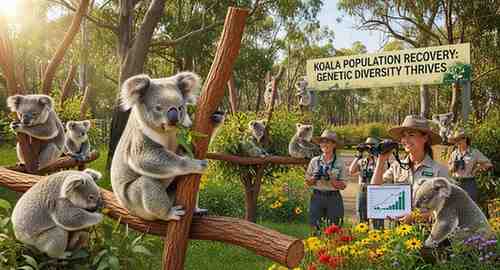
Rapid Growth of Victoria’s Koalas Shows Signs of Genetic Resilience
A recent study published in Science reports that the recovery of Koala populations in southeastern Australia has led to an unexpected rise in genetic variation. Researchers studying koalas in the Victoria found that the rapid population rebound has reshuffled genetic combinations within the species. This process could enhance the animals’ ability to adapt to environmental changes and improve their long-term survival prospects. The findings suggest that species recovering from severe population declines can gradually regain genetic resilience if their numbers increase quickly.
Historical Decline and Conservation Measures
During the early 20th century, koalas in Victoria were pushed close to extinction due to extensive hunting for their fur. The population dropped to an estimated 500 individuals . To protect the remaining animals, conservationists relocated small groups of koalas to nearby islands where they could reproduce without major threats. Over time, these island populations expanded significantly. Many of the animals were later reintroduced to mainland forests to restore wild populations.
Population Growth and Genetic Effects
By 2020 , Victoria’s koala population had grown to nearly 500,000 individuals . However, most of these animals descended from a small number of founders, creating what scientists call a genetic bottleneck —a situation where genetic diversity becomes limited after a drastic population decline. Researchers analysed genetic samples from 418 koalas across 27 populations in eastern Australia to track changes in their genomes. Although overall diversity remained modest, the rapid population expansion increased genetic mixing and mutation, creating new gene combinations.
Reduced Inbreeding and Health Benefits
Low genetic diversity often leads to inbreeding, which can cause health issues such as deformities or reduced immunity. Earlier research had documented dental and reproductive abnormalities among koalas. The new study indicates that increased breeding and gene reshuffling have begun to reduce such problems. Healthier genetic combinations are gradually spreading within the population, suggesting improving resilience among Victoria’s koalas.
Exam-Focused Key Points
-
Koala (Phascolarctos cinereus): Arboreal marsupial native to Australia.
-
Genetic Bottleneck: Occurs when population decline reduces genetic diversity.
-
Habitat: Koalas primarily live in eucalyptus forests and feed on eucalyptus leaves.
-
Population recovery in Victoria increased genetic mixing and mutation rates.
-
Higher genetic diversity improves a species’ adaptability and survival potential.
Month: Current Affairs - Mar 09, 2026
Category: Environment & Biodiversity