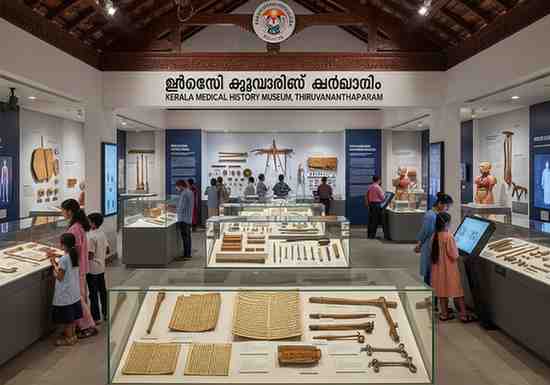
Some specific topics covered in the displays include:
-
Stages of mitosis (how cells divide)
-
Embryonic development (week by week)
-
Heart development (how the heart forms in the fetus)
-
Vascular structures (arteries and veins)
-
Organ systems and basic histology (study of tissues)
The Role of Such Museums in Medical Education
Why are medical museums still important in the age of computers and 3D animations? Because there is no substitute for seeing a real model or specimen with your own eyes. Handcrafted models help students understand the size, shape, and position of organs. They can be touched (carefully) and viewed from all angles. In many medical colleges, older models are thrown away when they become outdated. But these models are part of history. They show how medical teaching has evolved. The Museum of Medical Archives preserves this history. It also helps students who learn better with physical models than with digital screens. Teachers can bring classes here for a unique learning experience.
A. Sivaraman: The Artist Behind the Museum
A. Sivaraman is a remarkable man. He was not a doctor. He was an artist. But he had a deep interest in the human body. At Government Medical College, Thiruvananthapuram, he worked closely with professors and students. They told him what they needed, and he created it. He made sure that every model was accurate. He used his artistic skills to make anatomy beautiful and easy to understand. He worked there for many years. After retirement, he did not want his life’s work to be forgotten. So he built this museum with his own savings. His son, Dr. S. Abhirami, is a medical professional. He helped his father organise the exhibits and run the museum. Together, they have created a wonderful gift for future generations.
Why This Museum Is Unique
There are other medical museums in India. For example, the museum at the National Institute of Mental Health and Neurosciences (NIMHANS) in Bengaluru is famous. Many government medical colleges have their own small museums. But all of them are run by the government or by educational institutions. The Museum of Medical Archives in Ulloor is different. It is completely private. It is not attached to any college or hospital. A. Sivaraman built it with his own money and effort. That makes it India’s first private medical museum. It is also Kerala’s first private medical museum. This is a unique achievement.
Visiting the Museum
The museum is located in Ulloor, Thiruvananthapuram. It is open to students, researchers, and the general public. Since it is a small, private museum, visitors may need to call ahead for an appointment. The entry fee is very small. The museum hopes to get support from the government and from donors so that it can grow and preserve more medical artefacts. It is a place that will inspire young students to take up medicine and appreciate the beauty of the human body.
Conclusion: Preserving the Past for the Future
The Museum of Medical Archives is more than just a collection of old models. It is a tribute to the art of teaching medicine. It honours the work of A. Sivaraman, a man who
Month: Current Affairs - May 26, 2026
Category: History of Medicine