Flood history adds a new layer to Keezhadi’s past
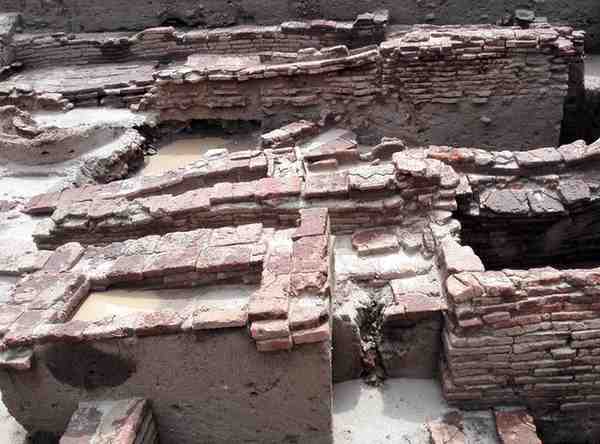
Archaeological excavations at Keezhadi , located along the Vaigai river in Tamil Nadu’s Sivaganga district, have repeatedly revealed brick-built structures, drainage canals, floors and pottery that mirror descriptions of organised urban life found in Sangam literature . A new scientific study has now provided an important environmental context, suggesting that large river floods buried parts of the settlement a little over a millennium ago.
Why dating sediments is crucial
Keezhadi lies on a mound within the Vaigai floodplain , where ancient remains are not visible on the surface but lie beneath layers of sand, silt and clay. While artefacts help establish human occupation, archaeologists must also determine when natural processes disrupted or sealed the site . Dating the sediments that cover the structures helps distinguish between periods of habitation and later environmental events such as floods.
Measuring time through light
To establish this timeline, researchers from the Physical Research Laboratory and the Department of Archaeology, Tamil Nadu , used optically stimulated luminescence (OSL) dating . This method estimates when mineral grains were last exposed to sunlight. Four sediment samples from two excavation pits were analysed, enabling scientists to date the flood deposits that buried the archaeological layers.
Signs of major flooding
The OSL dates span roughly the last 1,200 years and increase with depth, consistent with repeated flood-driven sedimentation. Fine silty clay layers were found above brick structures, while coarser sand lay below, indicating a high-energy flood event followed by calmer deposition . The researchers concluded that the urban-like structures at Keezhadi were buried around 1,155 years ago , likely due to major flooding of the Vaigai river.
Climate context and archaeological value
The findings align with evidence of late Holocene climate variability , when South Indian rivers frequently shifted course. Today, the Vaigai flows several kilometres away from Keezhadi. By identifying when floods buried the site, the study refines Keezhadi’s chronology and guides future excavations, showing how environmental forces shape both human settlement and archaeological preservation.
Important Facts for Exams
-
Keezhadi lies on the Vaigai river floodplain in Tamil Nadu
-
OSL dating measures the last sunlight exposure of sediments
-
The study dates flood deposits, not construction phases
-
River flooding can bury and preserve ancient settlements
Month: Current Affairs - December 26, 2025
Category: Art & Culture, Archaeology