Deep-Sea Rare Earth Find Could Transform Global Mineral Supply
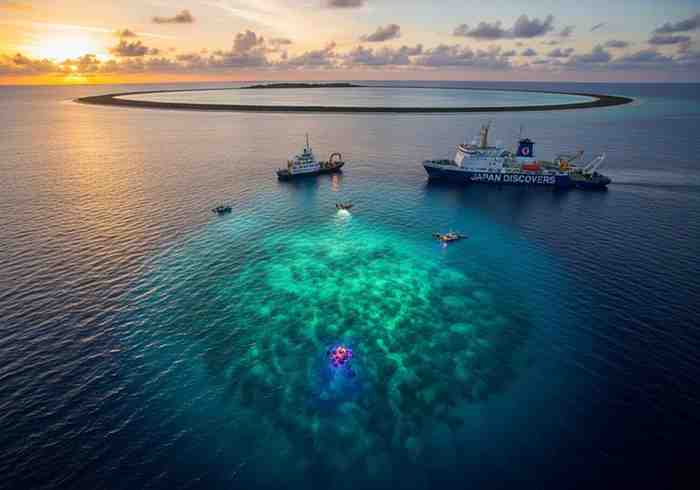
Japan has identified a massive deep-sea reserve of rare earth elements near Minamitorishima island in the Pacific Ocean. Located at a depth of nearly 6,000 metres, this discovery could significantly reshape global supply chains for critical minerals.
Scale and Composition of the Discovery
The deposit is estimated to contain over 16 million tonnes of rare earth-rich mud. It includes key elements such as yttrium and dysprosium, which are essential for high-performance magnets used in electric vehicles, wind turbines, and advanced electronics. Scientists suggest that this reserve could meet global demand for certain elements for several centuries.
Technological Breakthrough in Extraction
The discovery was made by researchers from the University of Tokyo using the advanced drilling vessel Chikyu. Innovative techniques, including a riser pipe system, enabled extraction from extreme depths where pressure conditions are extraordinarily high. Initial test extractions have demonstrated technical feasibility.
Strategic and Economic Significance
Rare earth elements are critical for modern technologies, including renewable energy systems, electric mobility, and defence equipment. This discovery strengthens Japan’s resource security by reducing reliance on traditional suppliers. It also enhances global efforts to diversify supply chains for critical minerals.
Implications for Future Energy Systems
As demand for clean energy technologies rises, rare earth elements are becoming strategically vital. Deep-sea resources like this deposit may play a key role in supporting the global energy transition. However, environmental concerns related to deep-sea mining and ecosystem disruption remain important considerations.
Exam-Focused Points
-
Location: Near Minamitorishima island (Pacific Ocean)
-
Depth: ~6,000 metres below sea level
-
Resource: 16 million tonnes of rare earth-rich mud
-
Key elements: Yttrium, Dysprosium
-
Technology: Deep-sea drilling using vessel Chikyu
-
Significance: Boosts resource security & clean energy supply chains
Month: Current Affairs - March 24, 2026
Category: Resources, Environment