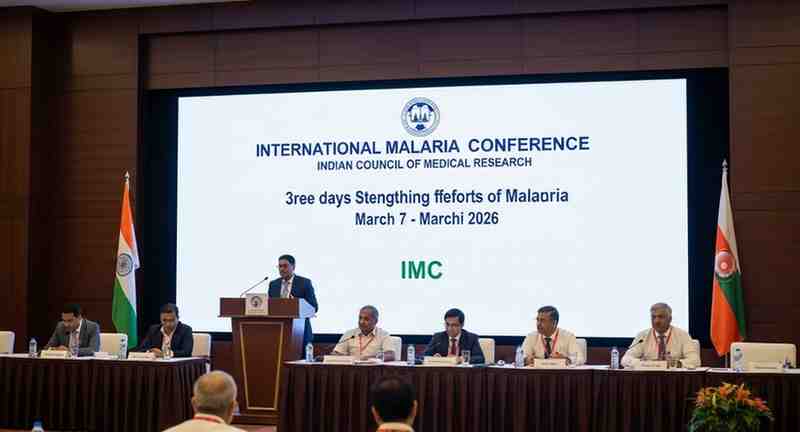
IMC 2026 Highlights Global Strategies for Malaria Elimination
The International Malaria Conference (IMC) 2026 concluded in New Delhi after three days of extensive discussions focused on strengthening global efforts to eliminate malaria. The conference was organised by the ICMR–National Institute of Malaria Research under the Indian Council of Medical Research from March 7 to March 9, 2026 . The event brought together scientists, policymakers, healthcare professionals and researchers from India and several other countries to exchange knowledge and explore new approaches to malaria control.
Theme and Key Objectives
The conference was held under the theme “Discovery, Development and Delivery: Driving Malaria Elimination and Beyond.” It aimed to strengthen collaboration between scientific institutions and public health agencies working toward malaria elimination. Participants discussed the importance of continued research, resilient healthcare systems and coordinated international action to achieve long-term malaria control and eradication goals.
Scientific Research and Emerging Insights
Under the “Discovery” segment, experts presented recent advances in malaria research, particularly in parasite biology, transmission patterns and genetic mechanisms linked to drug resistance . Scientists highlighted how improved understanding of parasite behaviour and vector dynamics could help design more effective malaria control strategies.
Innovations in Diagnostics and Surveillance
The “Development” sessions focused on technological progress in diagnostic methods, surveillance systems and research tools used to detect and monitor malaria infections. Researchers also shared findings on improved testing techniques and data-driven surveillance methods that can support early detection and rapid response to outbreaks.
The conference also encouraged participation from early-career scientists , who presented their research through poster exhibitions and short presentations, enabling knowledge exchange and collaboration among emerging researchers.
From Research to Public Health Implementation
The final sessions addressed the “Delivery” component, which emphasised translating scientific discoveries into practical public health measures. Discussions explored strategies to address residual malaria transmission , the potential role of malaria vaccines , and the importance of community-based interventions in strengthening disease control programmes.
Participants reaffirmed their commitment to accelerating research and policy initiatives aimed at achieving a malaria-free future .
Exam-Focused Points
-
Malaria is caused by Plasmodium parasites transmitted through the bite of infected female Anopheles mosquitoes .
-
Indian Council of Medical Research coordinates biomedical research activities in India.
-
ICMR–National Institute of Malaria Research focuses on malaria research, surveillance and control strategies.
-
India targets malaria elimination by 2030 under the National Framework for Malaria Elimination .
-
Global cooperation and scientific innovation are key components in combating malaria.
Month: Current Affairs - March 10, 2026
Category: Health & Disease Control