and wind investments expand—reflecting the tension between developmental imperatives and climate responsibility that many emerging economies face.
The digital frontier as diplomacy
Perhaps the most innovative strand of India’s engagement has been technological. As the internet fragments into sovereign digital zones, India has begun exporting public digital goods. The internationalisation of the Unified Payments Interface and the broader India Stack offer transparent, democratic alternatives to opaque digital infrastructures.
In a low-trust world, providing global public goods—digital, financial or developmental—has emerged as a powerful source of credibility where traditional geopolitics often fails.
AI, jobs and the social contract
Artificial intelligence accelerated its impact in 2025, reshaping labour markets and productivity. India’s vast IT workforce faces disruption, but also opportunity. With strong digital public infrastructure and growing AI hubs, India is positioned to shape global AI governance. The challenge is internal: reskilling workers, preventing digital exclusion, and ensuring that technological gains do not widen social divides.
Bridges in a fractured world
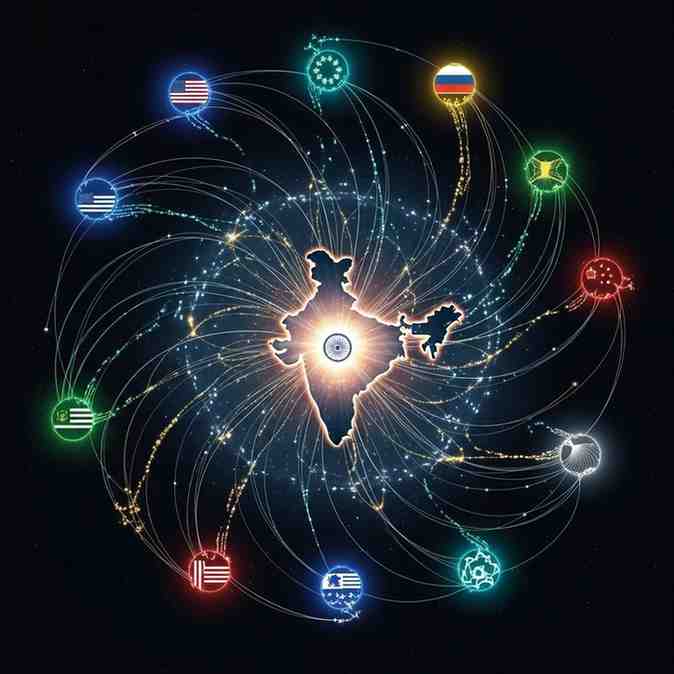
As 2026 begins, interdependence without trust is likely to persist. India’s experience suggests that the answer lies neither in isolation nor blind alignment, but in confident engagement guided by national interest and global responsibility.
By choosing multi-alignment over rigid loyalties, India has positioned itself as a rare stabilising bridge across a fragmented international system. The year ahead will demand prudence, ambition and inclusivity—but if 2025 was any indication, India has learned to walk this tightrope with growing assurance.
Month: Current Affairs - January 03, 2026
Category: