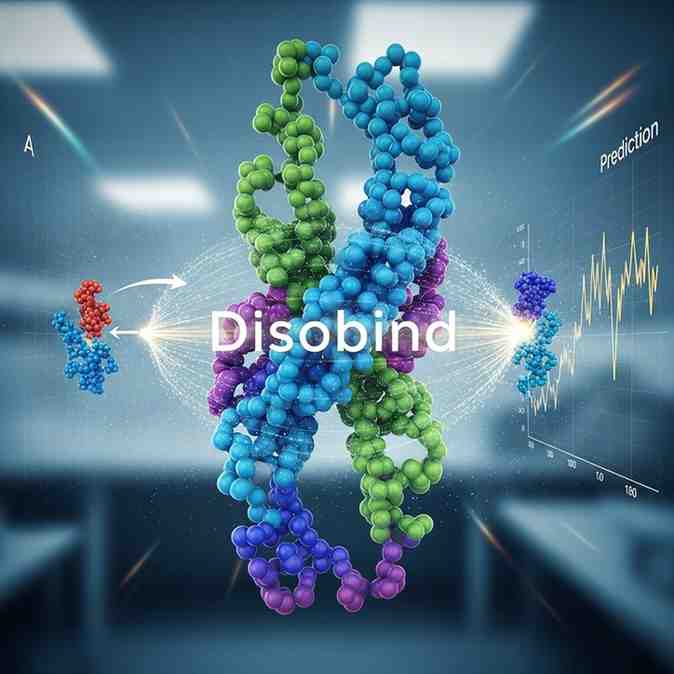
Indian Scientists Develop AI Tool to Decode Binding of Disordered Proteins
Researchers at the National Centre for Biological Sciences (NCBS), under the Tata Institute of Fundamental Research , Bengaluru, have developed a deep-learning-based tool that can predict how intrinsically disordered proteins (IDPs) interact with their binding partners. The breakthrough addresses a long-standing challenge in molecular biology and holds promise for advances in disease research and drug discovery .
Why Intrinsically Disordered Proteins Are Important
Unlike conventional proteins that fold into stable three-dimensional structures, intrinsically disordered proteins do not have a fixed shape. Despite this apparent lack of structure, they play critical roles in cellular functioning . IDPs are involved in:
-
Cell signalling and regulatory networks
-
Gene expression control
-
Protein folding and quality control
-
Formation of biomolecular condensates
Their structural flexibility allows functional versatility but has made them difficult to study using traditional structural biology tools .
Disobind: The Deep-Learning Breakthrough
The newly developed tool, named Disobind , predicts which regions of a disordered protein are likely to bind to a specific partner protein. It uses protein language models , a class of artificial intelligence trained on millions of protein sequences , to identify interaction-prone regions directly from sequence data.
A key strength of Disobind is that it:
-
Does not require prior structural information
-
Does not rely on sequence alignments
-
Explicitly accounts for the identity of the binding partner , which is crucial for IDP interactions
Performance and Benchmarking
The research team, led by Kartik Majila , benchmarked Disobind against existing state-of-the-art predictors such as AlphaFold-Multimer and AlphaFold3 .
Disobind consistently demonstrated higher predictive accuracy , especially when tested on previously unseen protein pairs . Notably, when combined with AlphaFold-Multimer outputs, overall prediction performance improved further, indicating that Disobind complements structure-based approaches rather than replacing them .
Applications in Disease Research and Drug Design
According to Shruthi Viswanath , head of the Integrative Structural Biology Lab at NCBS, Disobind can help:
-
Identify disease-associated interaction motifs
-
Reveal new therapeutic intervention points
-
Study protein systems involved in immune signalling, cancer, and neurodegenerative disorders
Importantly, Disobind has been released as open-source software , enabling researchers worldwide to freely apply and build upon the tool.
Exam-Focused Points
-
Intrinsically disordered proteins (IDPs) lack a stable 3D structure.
-
Protein language models are AI systems trained on large protein sequence datasets.
-
NCBS is a premier life sciences institute under TIFR .
-
AlphaFold tools are used for protein structure and interaction prediction.
-
Disobind is released as open-source software .
Month: Current Affairs - Jan 19, 2026
Category: Biotechnology | Artificial Intelligence