Overview
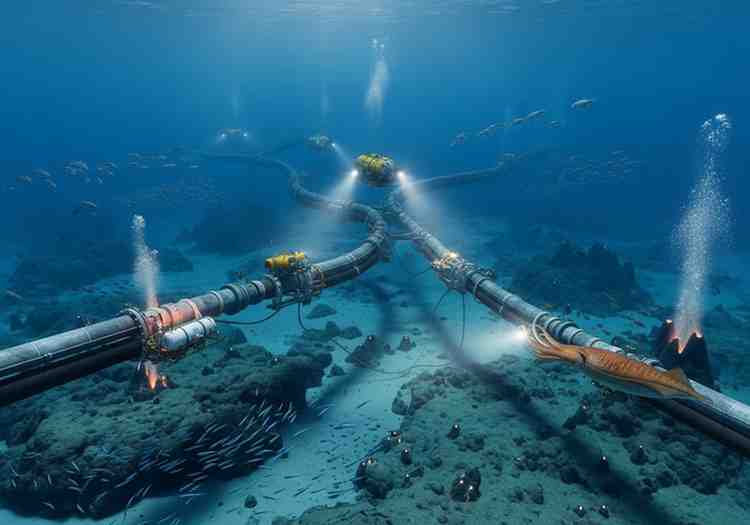
India is planning a new natural gas pipeline from Oman to Gujarat. The pipeline will start at Ras Al Jifan in Oman and end at Porbandar in Gujarat. It will run deep under the Arabian Sea. The total length will be about 1,600 to 2,000 km. The deepest point will be around 3,450 metres.
Pipeline Route and Capacity
The pipeline will carry 31 million metric standard cubic metres per day (mmscmd) of natural gas. The route connects Oman directly to India’s west coast. This will help India depend less on gas shipments by ship.
The path goes through:
Project Cost and Technical Features
The estimated cost of the project is Rs 40,000 crore to Rs43,000 crore (about 4.7 to 6 billion US dollars). This is a deep-water pipeline project. It must work at extreme seabed depths and over very long distances under the sea.
Institutions and Feasibility Work
Three state-run companies will prepare the Detailed Feasibility Report:
-
GAIL (India) Ltd
-
Indian Oil Corporation
-
Engineers India Ltd
The South Asia Gas Enterprise has already done a physical test. They laid a test pipeline of about 3,000 metres along part of the route. This test cost around ?25 crore. It helped check seabed conditions and high-pressure pipe-laying methods.
Energy Security Context
India currently uses about 190 to 195 mmscmd of natural gas at home. By 2030, the demand is expected to rise to 290 to 300 mmscmd .
This pipeline is part of a bigger plan to get gas from:
-
Oman
-
United Arab Emirates
-
Saudi Arabia
-
Qatar
-
Turkmenistan
India imports a large share of its crude oil. Pipelines like this help make India’s energy supply more secure.
Exam-Focused Points
-
Pipeline from Ras Al Jifan (Oman) to Porbandar (Gujarat) .
-
Length: 1,600–2,000 km ; maximum depth: 3,450 metres .
-
Capacity: 31 mmscmd of natural gas.
-
Estimated cost: Rs 40,000–43,000 crore .
-
Key agencies: GAIL, Indian Oil, Engineers India Ltd .
-
Test pipeline length: 3,000 metres ; test cost: rs 25 crore .
-
Current gas demand: 190–195 mmscmd ; 2030 demand: 290–300 mmscmd .
-
Strait of Hormuz is a narrow passage between Persian Gulf and Gulf of Oman.
-
GAIL is a Maharatna public sector company.
Frequently Asked Questions (FAQ)
Q1: Where will the pipeline start and end?
A: It will start at Ras Al Jifan in Oman and end at Porbandar in Gujarat.
Q2: How much natural gas will the pipeline carry every day?
A: It will carry 31 million metric standard cubic metres of gas per day (31 mmscmd).
Q3: Which Indian companies are working on this project?
A: GAIL, Indian Oil Corporation, and Engineers India Ltd are preparing the feasibility report.
Q4: Why does India need this pipeline?
A: To reduce dependence on gas shipments by sea and improve energy security.
Q5: What was the purpose of the test pipeline?
A: To check seabed conditions and test high-pressure pipe-laying methods at deep sea.
Month: Current Affairs - May 14, 2026
Category: India-Oman Subsea Gas Pipeline