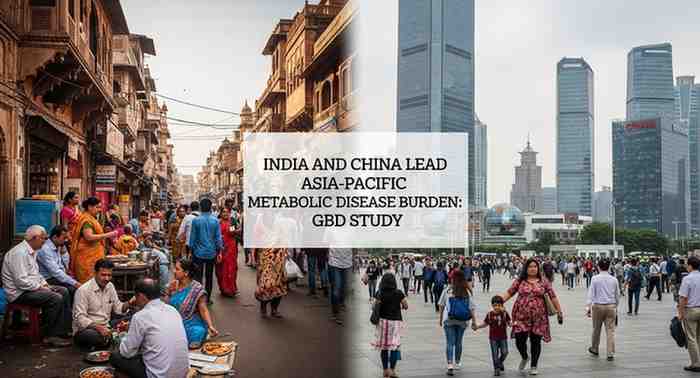
Rising Metabolic Disorders in India Highlighted by Global Health Analysis
A recent analysis based on the Global Burden of Disease Study has found that India and China account for the largest absolute metabolic disease burdens in the Asia-Pacific region. The research examined trends between 1990 and 2023 and also projected future patterns up to 2030 . The findings were published in the peer-reviewed journal Metabolism . Scientists evaluated indicators such as disability-adjusted life years (DALYs) and mortality rates associated with major metabolic diseases and their risk factors across the region.
Understanding Metabolic Diseases
Metabolic diseases develop when the body’s ability to process and utilise energy from food becomes disrupted. These conditions are influenced by lifestyle habits, dietary patterns, genetic predisposition and environmental factors. The study focused on five major metabolic risks: Type 2 Diabetes , high systolic blood pressure, elevated body mass index (BMI), high low-density lipoprotein (LDL) cholesterol and Metabolic Dysfunction-Associated Steatotic Liver Disease . Collectively, these conditions significantly contribute to disability, chronic illness and premature death worldwide.
India’s Rising Health Burden
According to the analysis, India and China together represent the majority of the metabolic disease burden in the region. In 2023 , India recorded approximately 21 million DALYs and nearly 5.8 lakh deaths linked to Type 2 diabetes alone. High systolic blood pressure accounted for about 3.8 crore DALYs and roughly 15.7 lakh deaths . Increasing levels of obesity, LDL cholesterol and fatty liver disease are also intensifying health risks. Notably, India surpassed China in DALYs related to metabolic diseases in 2023 , becoming the most affected country in the Asia-Pacific region.
Future Trends and Emerging Risks
Researchers warn that several metabolic risk factors are steadily increasing in India. High BMI, for example, has been growing at an annual rate of nearly 2.7–2.9 percent , while LDL cholesterol and fatty liver disease are also rising. If these trends continue, the region’s metabolic disease burden could increase significantly by 2030 , placing greater strain on healthcare systems.
Exam-Focused Key Points
-
GBD Study: Global research project measuring disease burden and health trends.
-
DALYs: Indicator combining years of life lost with years lived with disability.
-
Major Metabolic Risks: Type 2 diabetes, hypertension, obesity, high LDL cholesterol and MASLD.
-
India reported 21 million DALYs and 5.8 lakh deaths from Type 2 diabetes in 2023 .
-
Lifestyle changes and rising obesity are major drivers of metabolic diseases.
Month: Current Affairs - March 09, 2026
Category: Public Health | Non-Communicable Diseases