Overview
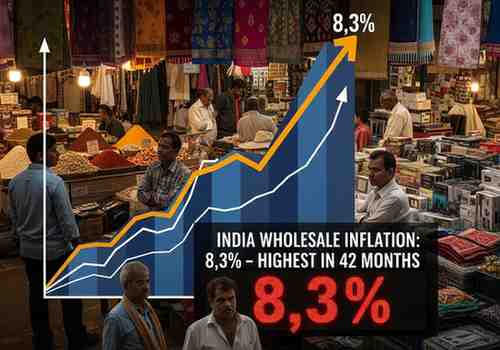
India recorded a sharp increase in wholesale inflation in April 2026. The Wholesale Price Index (WPI) rose to 8.3%, the highest level in nearly three and a half years. The rise was mainly caused by higher fuel prices, rising crude oil costs, and tensions in West Asia. The increase may affect industries, transport costs, consumers, and future monetary policy decisions.
India’s Wholesale Inflation Rises Sharply
Wholesale inflation in India climbed to:
This is the highest WPI inflation level in 42 months.
The increase reflects rising cost pressure across many sectors of the economy.
Fuel and Power Segment Records Major Jump
The biggest rise came from the fuel and power category.
Fuel and Power Inflation
Inflation in this segment increased to:
It was only:
The sharp increase happened because global crude oil prices moved higher during tensions in West Asia.
Major Fuel Categories Became More Expensive
Several fuel products saw strong price increases.
| Fuel Type |
Inflation Rate (April 2026) |
| Petrol |
32.40% |
| High-Speed Diesel |
25.19% |
| Liquefied Petroleum Gas (LPG) |
10.92% |
These rising fuel prices increased operational costs across the economy.
What Is Wholesale Price Index (WPI)?
The Wholesale Price Index measures inflation at the wholesale or producer level.
It tracks the prices businesses pay before goods reach consumers.
Why WPI Is Important
WPI helps measure:
- Manufacturing costs
- Supply chain pressure
- Producer inflation
- Industrial input prices
If WPI remains high for a long time, companies may later increase retail prices.
This can eventually affect consumers through higher inflation.
Three Major Components of WPI
WPI is divided into three main categories.