India Launches Pioneering Environmental Lab to Transform Air Quality Monitoring
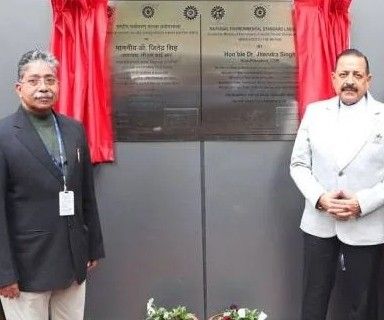
India has inaugurated the world's second National Environmental Standard Laboratory, a landmark development poised to revolutionize environmental governance and domestic manufacturing. Established at the CSIR–National Physical Laboratory (CSIR-NPL) in New Delhi, the facility was unveiled by Union Minister Dr. Jitendra Singh during the institution's 80th Foundation Day celebrations. With this, India joins the United Kingdom as the only nation to possess such an advanced environmental calibration center.
Ensuring Accuracy for Indian Conditions
The laboratory addresses a critical gap in India's environmental monitoring framework. Presently, most air quality monitoring instruments deployed across the country are imported and certified under foreign environmental conditions. These conditions—varying in temperature, humidity, and pollutant mix—differ markedly from India's diverse climatic zones, potentially compromising long-term measurement accuracy. The new facility will provide India-specific testing and calibration, ensuring that monitoring equipment delivers reliable performance under local atmospheric conditions. This enhancement is expected to significantly bolster the credibility of the air quality data that underpins national regulations and public health policies.
Catalyzing Domestic Industry and Export Potential
A primary objective of this initiative is to boost indigenous manufacturing and reduce dependency on foreign certification. By creating a domestic ecosystem for standardized testing and calibration, the laboratory will support local producers in developing certified, high-quality air pollution monitoring equipment. This strategic move aims not only to curb imports but also to position India as a future exporter of such instruments, especially to other developing nations. The step taps into the nearly $4 billion global market for air pollution monitoring systems, opening substantial economic opportunities.
Strengthening Clean Air Initiatives
The laboratory will serve as a crucial resource for regulatory bodies, industries, and clean-tech startups by providing transparent and traceable calibration services. Accurate and standardized monitoring data is fundamental to the effective implementation of ambitious programs like the National Clean Air Programme (NCAP), which targets a significant reduction in particulate matter pollution across Indian cities. Reliable instruments will improve compliance tracking and enable precise assessment of mitigation measures.
Parallel Advance in Renewable Energy Standards
In a related push for self-reliance in green technology, India simultaneously inaugurated the National Primary Standard Facility for Solar Cell Calibration at CSIR-NPL. This establishment places India among a select group of nations with advanced capabilities in photovoltaic measurement standards. The facility is anticipated to reduce foreign exchange expenditures, shorten certification timelines for domestic solar panel manufacturers, and enhance investor confidence in India's rapidly growing solar energy sector.
Key Facts for Examinations:
-
India has established the world's second National Environmental Standard Laboratory.
-
It is housed at the CSIR–National Physical Laboratory in New Delhi .
-
Previously, only the United Kingdom had a comparable facility.
-
The lab directly supports the objectives of the National Clean Air Programme (NCAP) .
-
A companion National Primary Standard Facility for Solar Cell Calibration was also launched.
Month: Current Affairs - January 06, 2026
Category: Environment & Science