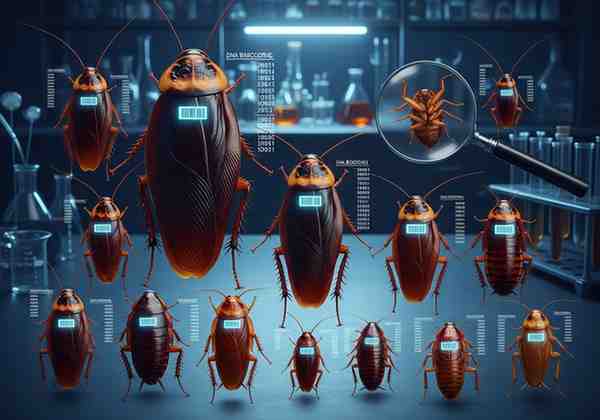
India, Africa, South America, Antarctica, Australia, and Madagascar. When Gondwana broke apart, India drifted northward. Cockroach populations got isolated and evolved along separate paths. This explains why India has so many unique forms. The DNA barcode data also supports these ancient links. Genetic signatures of Indian endemics sometimes show closeness to species in Africa or Madagascar. This pattern fits the Gondwanan story perfectly.
Ecological Role of Cockroaches
In nature, cockroaches are far from useless. They are vital decomposers. They feed on dead leaves, rotting wood, and animal waste. By breaking down organic matter, they release nutrients back into the soil. This nourishes plants and keeps the forest floor clean. Cockroaches also act as nutrient recyclers. They speed up the cycle of life in tropical ecosystems. Many wild cockroaches are excellent bioindicators. Their presence, absence, or population health tells scientists about the quality of the habitat. A rich cockroach fauna usually signals a healthy, undisturbed forest.
Recent Species Discovery: Neoloboptera peninsularis
In March 2026, ZSI scientists described a new endemic cockroach from the Deccan Peninsula. They found it near Nathachiwadi in Pune district. They named it Neoloboptera peninsularis . This discovery pushed India’s documented cockroach species count from 190 to 191. The new species is part of a poorly known genus. Its discovery highlights how much remains hidden in India’s scrublands and dry forests. The DNA barcode of this species was immediately added to the reference library. This shows how field exploration and lab work go hand in hand.
Why the DNA Barcode Library Is a Game Changer
A robust DNA reference library helps more than just taxonomists. Forest guards can identify species quickly during wildlife surveys. Quarantine officers can spot invasive cockroach species at ports. Ecologists can study the diet of insect-eating animals by analysing DNA in their droppings and matching it with the library. The library also supports conservation planning. Endemic species with narrow ranges need protection. Without proper identification, conservation efforts stay blind. The new library removes that blindness.
The Modern Order Blattodea
Many students still learn that cockroaches belong to the order Blattodea and termites belong to a separate order Isoptera. Modern classification has changed this. Termites are now placed under Blattodea as well. They are essentially social cockroaches. This scientific update came from DNA evidence. The same molecular tools that built the cockroach barcode library helped solidify this classification. So, when we speak of Blattodea today, we include both the typical cockroaches and the entire termite clan.
A Look Ahead
India’s cockroach inventory is far from complete. Many remote forests, caves, and high-altitude zones remain underexplored. The DNA barcode library will keep growing. Each new addition fills a gap and often reveals hidden species. The Zoological Survey of India plans to extend this work to other insect groups as well. A national insect reference library is the goal. Such a resource will strengthen ecological monitoring across the country.
Exam-Focused Points
-
India has 191 recorded species of cockroaches ; more than 60% are endemic .
-
The study published in Zootaxa gave India its first and largest cockroach DNA barcode reference library .
-
Over 100 high-quality DNA barcodes were generated using the mitochondrial COI gene .
Month: Current Affairs - May 27, 2026
Category: Environment - Biodiversity