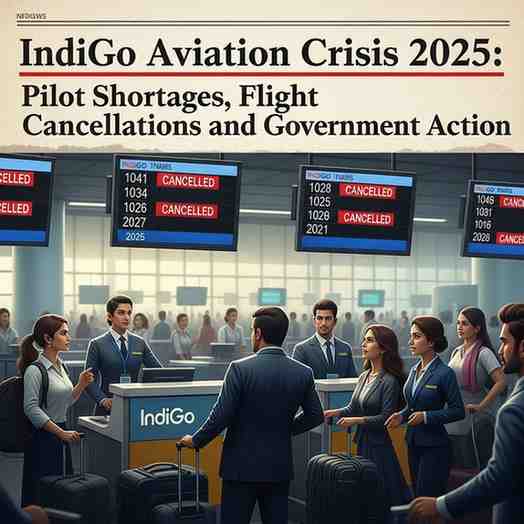
IndiGo Network Collapse Triggers Nationwide Aviation Crisis
India witnessed one of its most severe aviation disruptions in recent years as IndiGo’s domestic network unraveled over five days , resulting in thousands of cancellations, stranded passengers, and record-high airfares. The crisis stemmed from the airline’s inability to adapt to the newly enforced 2024 Flight Duty Time Limitations (FDTL) , which tightened fatigue management rules for pilots and required major roster restructuring.
How the Disruption Escalated
The meltdown began when IndiGo’s pilot scheduling system failed to accommodate the revised FDTL norms. With more than 2,300 daily flights , the airline experienced an immediate shortage of available crew, leading to a wave of cancellations. By Day 5, airports across Delhi, Bengaluru, Mumbai, and Srinagar saw crowded terminals, overnight delays, and passengers seeking last-minute alternatives. Even foreign dignitaries had to switch to virtual participation at official events.
Why Pilot Shortages Became a Systemic Failure
Civil Aviation Minister Ram Mohan Naidu attributed the situation to IndiGo’s mismanagement of roster planning despite months of regulatory notice. Since pilots could not exceed duty limits and relief crew were insufficient, cancellations cascaded across the network.
The crisis also highlighted India’s market concentration , with IndiGo controlling more than half of domestic capacity—meaning disruptions in one airline quickly destabilise the entire sector.
Unprecedented Surge in Airfares
With more than 1,000 flights cancelled in a single day , capacity on major routes shrank drastically. Fares soared to ₹90,000 for one-way economy seats , prompting the Centre to enforce immediate price discipline. Airlines and booking platforms were warned against exploitative pricing, and temporary fare caps were imposed on heavily affected routes.
Railways and Other Airlines Step In
To absorb displaced demand:
-
Indian Railways added 116 coaches across 37 premium trains and announced special services.
-
SpiceJet and other carriers deployed over 100 additional flights on high-demand routes.
-
Major airports expanded helpdesks, issued advisories, and set up rest areas for stranded passengers.
These interventions underscored how disruptions in one airline can pressure the entire transport infrastructure.
Government Measures: Refunds, Oversight & Investigation
The Centre announced a package of immediate relief measures:
-
Automatic full refunds for cancelled flights
-
Hotel accommodation for passengers stranded due to long delays
-
A DGCA-led inquiry to determine operational lapses
-
Temporary relaxation of FDTL norms specifically for IndiGo to stabilise its schedules
Officials stated that accountability will be enforced once the inquiry findings are released.
Exam-Oriented Facts
Month: Current Affairs - December 06, 2025
Category: Indian Civil Aviation, DGCA Regulations