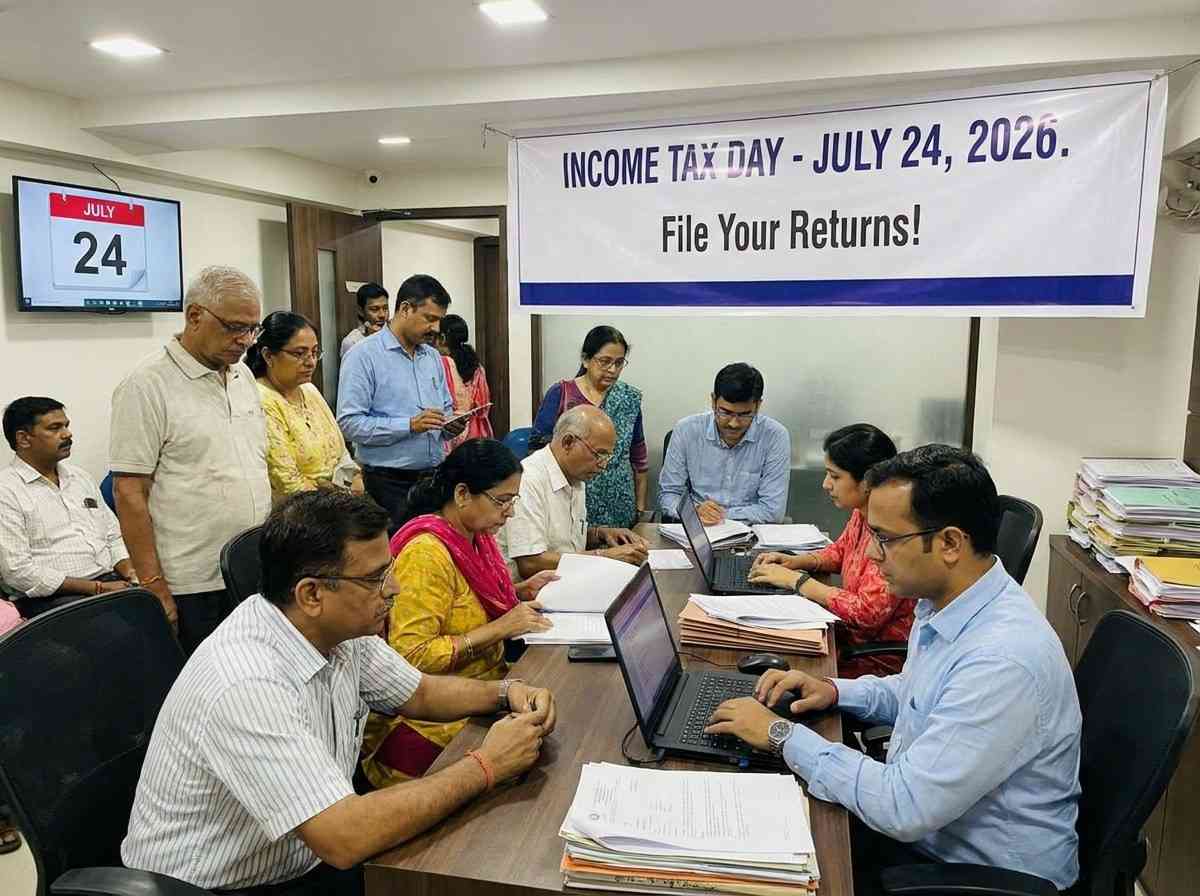
Overview :
India observes Income Tax Day on July 24, 2026, marking 167 years since Sir James Wilson introduced tax in 1860. CBDT started celebrating in 2010. The day honours taxpayers and showcases India's digital transformation - from paper filings to faceless assessments, pre-filled returns, and real-time refund tracking.
Exam-Focused Points :
-
Origin Story: Sir James Wilson, the first Finance Member of British India, introduced income tax on July 24, 1860. The British needed money after the 1857 Revolt. That's how India's tax journey began.
-
Three Key Acts: Income Tax Act 1922 created the first systematic framework. The modern Income Tax Act 1961 came into effect on April 1, 1962. This remains India's primary direct tax law today.
-
Celebration Begins: CBDT started observing Income Tax Day in 2010. This marked 150 years of income tax administration in India. The day recognises honest taxpayers and department efforts.
-
Digital Revolution: India shifted from paper-based to fully digital tax administration. Taxpayers now file online, verify digitally, track refunds in real-time, and receive e-notices. Pre-filled returns make compliance easier.
-
Faceless Assessment: Technology eliminated physical interaction between taxpayers and officers. This reduced harassment and improved transparency. The new Income Tax Bill aims to simplify language and structure further.
-
Tax and Nation Building: Government uses tax revenue for defence, infrastructure, healthcare, education, and welfare schemes. The day reminds citizens that paying taxes directly funds India's development.
-
Modern Reforms: CBDT introduced e-verification, digital records, and simplified compliance mechanisms. These changes make the process smoother, faster, and more user-friendly for 80 million+ taxpayers.
FAQs :
Q1: Why do we celebrate Income Tax Day on July 24 specifically?
A: Sir James Wilson introduced income tax in India on July 24, 1860. The British needed revenue after the 1857 Revolt. CBDT began official celebrations in 2010 to mark 150 years of this legacy.
Q2: What's the difference between the 1922 and 1961 Income Tax Acts?
A: The 1922 Act created organised tax collection machinery. The 1961 Act replaced it with a comprehensive framework that still governs direct taxes today. Think of 1922 as building the foundation, 1961 as constructing the complete house.
Q3: How has digital technology changed tax filing in India?
A: Everything shifted online - filing, verification, refund tracking, and notices. Pre-filled returns auto-populate your income details. Faceless assessment means no officer meets you. It's like moving from a filing cabinet to a smartphone.
Q4: What is faceless assessment and why does it matter?
A: Under faceless assessment, tax officers process your returns without meeting you. This eliminates bribery and harassment. The system randomly assigns cases to officers across India. Your tax officer could be sitting in Chennai while you file from Delhi.
Q5: How does income tax connect to India's startup ecosystem?
A: Startups benefit from tax incentives and deductions. Compliance becomes easier with digital filing. More taxpayers mean more revenue for government schemes that support innovation. Paying taxes literally funds India's entrepreneurial dream.
Month: Current Affairs - Jul 24, 2026
Category: Day