India’s strength as a low-cost producer of green fuels with Germany’s need to decarbonise its industrial base.
Such arrangements move green hydrogen from policy aspiration to commercial reality, anchoring climate cooperation in industrial logic rather than symbolism. They also highlight how climate action and economic competitiveness can reinforce each other.
With nearly 300,000 people of Indian origin in Germany and around 60,000 Indian students, mobility has become a strategic asset. Chancellor Merz’s explicit welcome to Indian students and skilled professionals reflects Germany’s demographic and skill needs. Prime Minister Modi, while endorsing mobility, emphasised the importance of sensitive handling of diaspora concerns, signalling that human connections now carry diplomatic weight.
Conclusion: beyond symbolism
With 27 outcomes—19 MoUs and eight announcements—and an invitation for Prime Minister Modi to Berlin for the next Intergovernmental Consultations, the visit went well beyond optics. It pointed to an effort to institutionalise momentum.
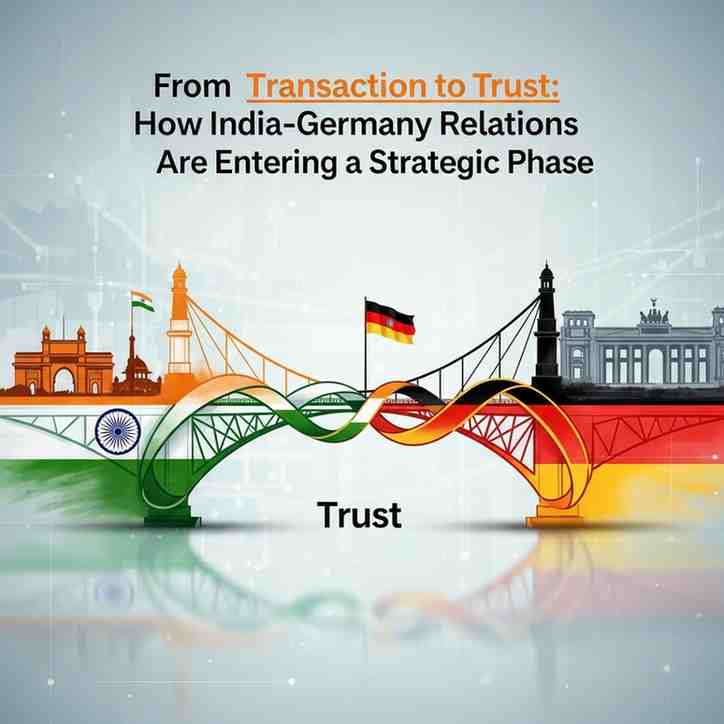
In a fractured global order, India and Germany appear to be betting on a simple proposition: that middle powers with shared democratic instincts, economic complementarities, and pragmatic diplomacy can still shape outcomes. Merz’s visit suggests that India–Germany relations are entering a more strategic phase—anchored not in ritual affirmation, but in trust, resilience, and coordinated action.
Month: Current Affairs - January 16, 2026
Category: