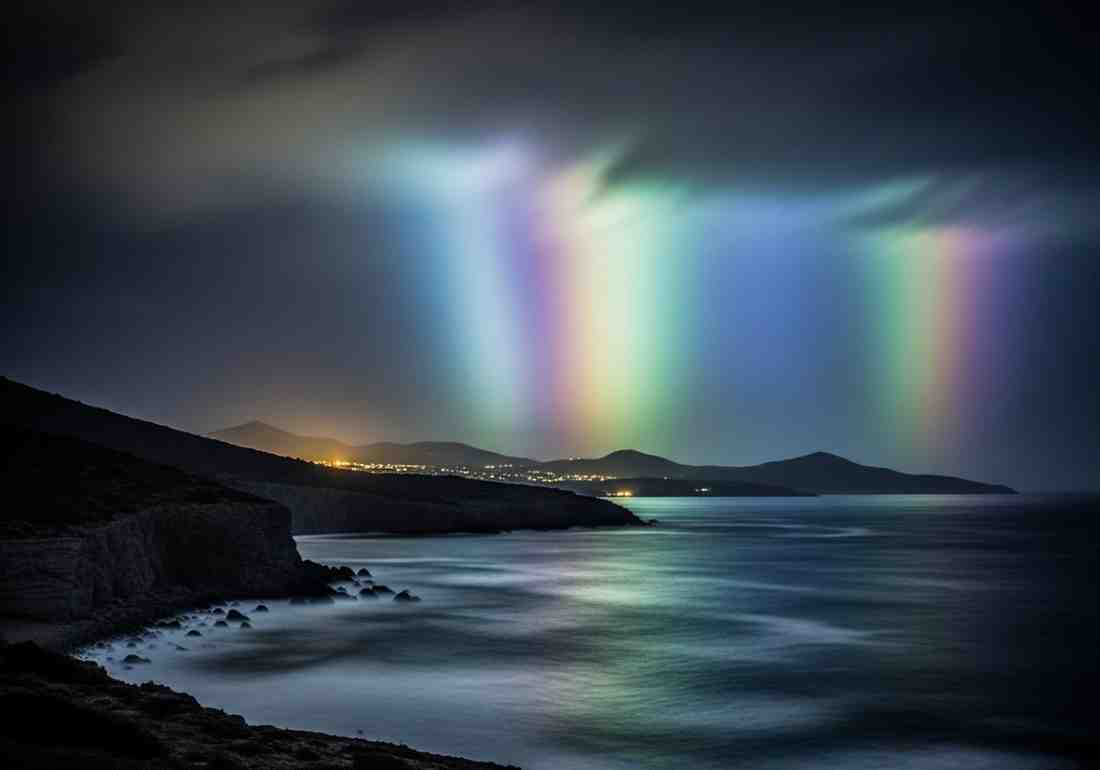
Unusual Lights Associated With Earthquakes
Earthquakes that occurred recently in the Aegean Sea between Turkey and Greece were also observed with strange lights in the sky. These mysterious phenomena called earthquake lights are studied intensively by geologists and associated with seismic activity occurring beneath the earth's crust.
What Are Earthquake Lights?
Earthquake lights are unusual optical phenomena that manifest themselves as flashes, balls, or beams in the atmosphere preceding, accompanying, or following an earthquake. Contrary to other types of lights, earthquake lights do not require thermal energy to appear and are created in the process of electrical phenomena taking place in the rock.
The Science Behind the Phenomenon
As a rule, earthquake lights occur due to high tectonic stresses acting on rocks. In particular, if there is quartz in the rocks, it generates electric charges under pressure. They rise to the earth's crust through cracks and react with the oxygen in the air leading to ionization and forming plasma. Consequently, this leads to the appearance of earthquake lights.
Geological Factors Involved in Their Formation
Earthquake lights are rare and not associated with every earthquake that takes place. Geologists have discovered that the likelihood of earthquake lights increases significantly when the fault lines are vertical or straight. In addition, certain minerals such as quartz facilitate the development of earthquake lights.
Exam Focused Points
- Earthquake lights = optical phenomena caused by seismic activity
- Generated by electric charges formed in the rocks
- Ionization of oxygen → plasma → light
- More common in quartz and rift zone rocks
- Do not happen during all earthquakes
Conclusion
Although earthquake lights have not been completely understood and are a subject of current research, they are valuable for studying the earth's crust. Earthquake lights are not helpful for predicting earthquakes at the moment; however, further study could increase knowledge of seismic processes.
Month: Current Affairs - April 03, 2026
Category: Geography - Geophysical