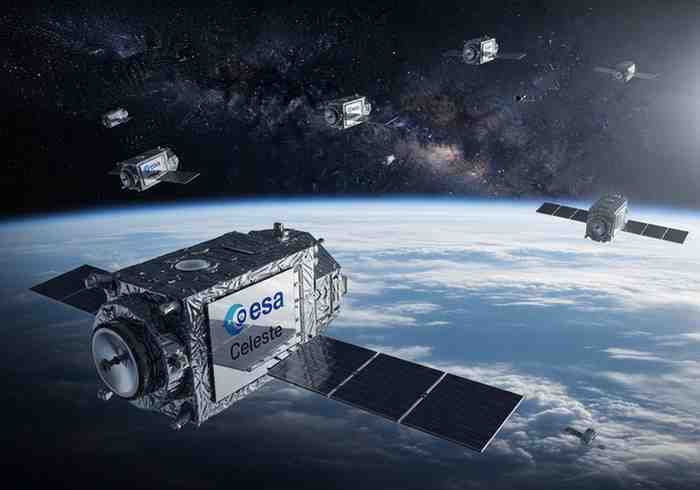
ESA Launches First Celeste Satellites.
The European Space Agency is able to launch the first two Celeste mission satellites. The satellites were launched into space by the Electron new Zealand Rocket Lab. This mission will be a major stride towards enhancing the satellite navigation system in Europe.
Mission Facts and Preliminary Operations.
On March 28, the Celeste IOD-1 and IOD-2 satellites were launched and separated an hour after the launch. They have been developed by GMV and Thales Alenia Space and are currently in their first operational stage. They are being trained to be fully operational in orbit by mission teams.
In favour of the Galileo Navigation System.
The Celeste project is meant to supplement the already existing Galileo system. Whereas Galileo satellites will be in medium earth orbit, Celeste satellites will be in low earth orbit. They are nearer to the Earth, which enables them to give more powerful signals and become more accurate.
New Technology and Features.
The satellites will be experimenting new navigation technologies and services. They work with L- and S-bands that are commonly employed in the communication systems. The mission has adopted a contemporary New Space strategy, which is all about accelerated growth and adaptive satellite placement.
Exam-Focused Points
-
Agency: ESA (European Space Agency)
-
Mission: Celeste (LEO navigation satellites)
-
Orbiter: Rocket Lab rocket (Electron)
-
Aids: Galileo navigation system.
-
Frequency bands: S-band and L-band.
Plans and Significance of the Future.
By 2027, the Celeste mission is going to be increased to approximately 11 satellites. It will facilitate such spheres as aviation, shipping, disaster response and smart technologies. This project will enhance the self-reliance of Europe in the navigation systems and improve the Europeans in the space technology.
Month: Current Affairs - April 02, 2026
Category: Space Technology