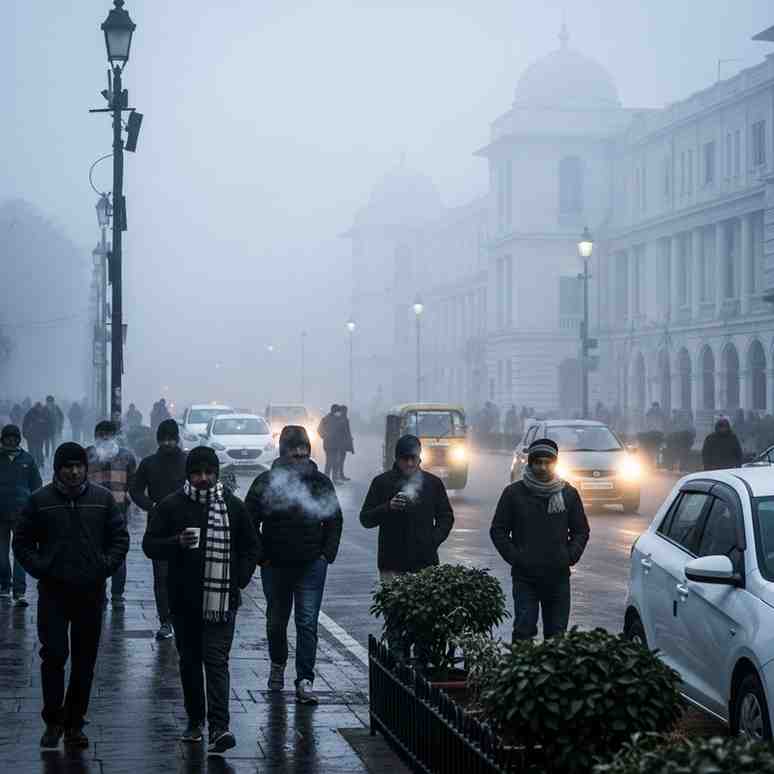
IMD Issues Yellow Alert as Delhi Temperatures Plummet, Air Quality Worsens
Delhi was shivering under the grip of its first intense cold wave of the winter season, leading the India Meteorological Department (IMD) to issue a yellow alert. The severe drop in temperatures, bringing minimums to near-freezing levels at several stations, disrupted daily life and compounded existing concerns over public health and deteriorating air quality in the national capital.
Cold Wave Conditions Intensify Across the Capital
Key weather stations across the city recorded minimum temperatures significantly below the seasonal average. The Safdarjung Observatory, Delhi's primary weather reference point, registered a low of 4.8°C. Conditions were even more severe at other locations, including Palam, Ridge, and Ayanagar, where temperatures dipped below 4°C, officially marking the season's inaugural cold wave event in Delhi.
Palam and Ayanagar Record Notable Lows
The Palam weather station recorded a minimum temperature of 3.0°C, its lowest January reading in 13 years. Ayanagar was the coldest recorded spot at 2.9°C, with both stations reporting temperatures over four degrees below normal. The historical all-time low for Palam remains -2.2°C, recorded in January 1967, providing context to the severity of the current spell.
IMD Forecast and Temperature Outlook
The IMD has predicted that the cold wave conditions are likely to continue for the next two days. Minimum temperatures are expected to remain in the range of 3°C to 5°C, while maximums may stay between 17°C and 19°C. Officially, a cold wave is declared when the minimum temperature departs from the normal by 4.5°C to 6.4°C.
Air Quality Remains a Major Concern
Accompanying the cold wave, Delhi's air quality persisted in the 'poor' category. The Central Pollution Control Board reported a 24-hour average Air Quality Index (AQI) of 291. Several monitoring stations recorded 'very poor' air quality, with forecasts indicating minimal improvement in the coming days.
Exam-Focused Points:
-
A cold wave is declared when the minimum temperature is 4.5°C to 6.4°C below normal .
-
Safdarjung is the principal reference weather station for Delhi.
-
Palam recorded 3.0°C , its lowest temperature in 13 years for January.
-
Delhi's all-time lowest temperature of -2.2°C was recorded at Palam in January 1967 .
-
The India Meteorological Department (IMD) issues color-coded weather alerts (Yellow, Orange, Red).
Month: Current Affairs - January 13, 2026
Category: Climate Phenomena