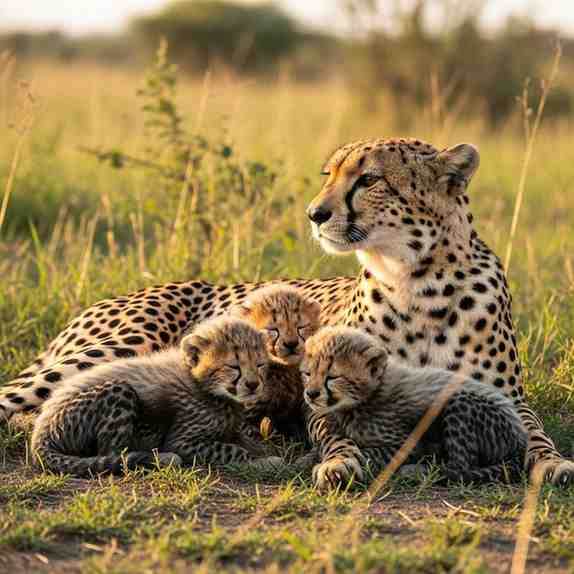
Project Cheetah Marks Three Years with Rising Indian-Born Population
India’s cheetah reintroduction programme has reached another important milestone with the birth of three cubs at Kuno National Park in Madhya Pradesh. With these births, India’s total cheetah population has increased to 38. The development was announced by Union Environment Minister Bhupender Yadav, who confirmed that Gamini, a cheetah translocated from South Africa, successfully delivered the litter.
Gamini’s Second Litter in India
This is Gamini’s second successful litter since her relocation, highlighting the species’ ability to adapt to Indian ecological conditions. With the latest births, the number of surviving cheetah cubs born in India has reached 27. Overall, this is the ninth confirmed litter produced on Indian soil under Project Cheetah. Conservation scientists view repeated breeding as a key sign that habitat quality, prey base and veterinary management are stabilising.
Three Years of Project Cheetah
The births coincide with three years of cheetah reintroduction in India. Between 2022 and 2023, 20 cheetahs were brought from Namibia and South Africa in the world’s first inter-continental translocation of a large carnivore. The initiative aims to restore a species that went extinct in India in 1952 due to overhunting and habitat degradation.
Ecological Importance
Cheetahs act as indicators of healthy grassland ecosystems. Their presence encourages balanced prey populations and brings renewed attention to conserving open natural habitats, which have historically received less protection than forests.
Important Facts for Exams
-
Cheetah was declared extinct in India in 1952
-
Project Cheetah is the first inter-continental relocation of a large carnivore
-
Kuno National Park lies in Madhya Pradesh
-
Cheetahs can sprint up to 100–120 km/h
Way Forward
With a growing number of Indian-born cubs, the programme is gradually moving towards its goal of establishing a self-sustaining cheetah population. Continued monitoring, habitat management and community engagement remain crucial for long-term success.
Month: Current Affairs - February 18, 2026
Category: Environment & Ecology | Wildlife