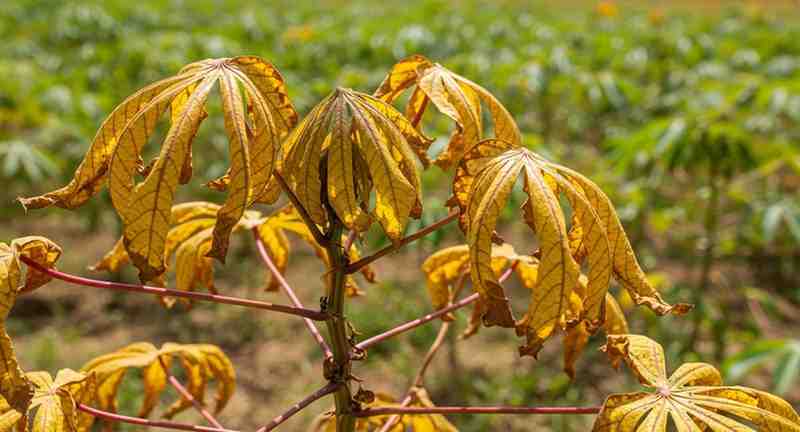
Viral Disease in Cassava Raises Alarm Across Major African Farming Regions
A rapidly spreading viral infection known as Cassava Brown Streak Disease is posing a serious threat to cassava cultivation across sub-Saharan Africa. Cassava is a vital staple crop for millions of people due to its ability to grow in drought-prone areas and nutrient-poor soils. Scientists warn that the growing spread of the disease could significantly weaken food security and rural livelihoods across the region.
Damage Caused by the Disease
Cassava Brown Streak Disease leads to severe necrosis in the storage roots of cassava plants. Infected roots often appear healthy until harvest, when farmers discover brown, rotten tissue that renders the crop unsuitable for consumption or sale.
Historically, the disease remained restricted to coastal zones of Tanzania and Mozambique for several decades. However, it has gradually expanded into countries such as Uganda and other parts of East and Central Africa. Researchers caution that West African countries—including Nigeria and Ghana, among the largest cassava producers—may face similar threats if containment efforts are not strengthened.
Scale of Potential Spread
A study published in the East African Journal of Science Technology and Innovation indicates that more than half of Africa’s land area is suitable for cassava cultivation. At the same time, roughly one-third of the continent could be vulnerable to the spread of the disease.
Factors such as environmental conditions, availability of host plants and the informal exchange of infected planting material contribute to the disease’s expansion. Climate change—through rising temperatures and altered rainfall patterns—may further increase susceptibility in several regions.
Role of Whitefly Transmission
The disease is mainly transmitted by the whitefly Bemisia tabaci. Certain genetic groups of this insect occur in large numbers in East and Central Africa, facilitating the spread of infection.
Smallholder farming practices also play a role. Farmers frequently replant cuttings from previous harvests, which may unknowingly carry the virus. Weak formal seed systems allow infected material to circulate widely. In contrast, countries with regulated seed distribution systems often rely on certified disease-free planting stock.
Important Facts for Exams
-
Cassava Brown Streak Disease causes root necrosis and heavy yield losses.
-
The disease is spread mainly by the whitefly Bemisia tabaci .
-
Cassava is a drought-resistant staple crop widely cultivated in Africa.
-
Climate change can increase the spread of crop pests and viral diseases.
Scientists are exploring resistant cassava varieties, including genetic material from South American strains. Breeding programmes in several African countries are testing varieties capable of resisting multiple viral threats. Strengthening clean seed systems and regional monitoring is considered crucial for protecting cassava production and ensuring long-term food security.
Month: Current Affairs - Mar 05, 2026
Category: Agriculture | Plant Diseases