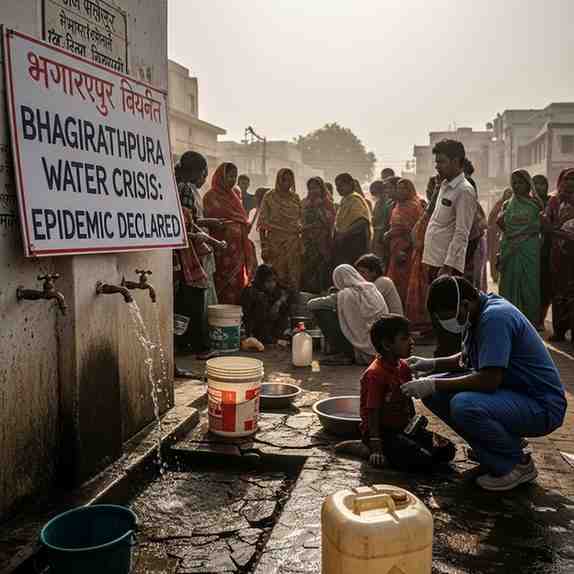
Indore Declares Bhagirathpura Waterborne Disease Outbreak an Epidemic
The health administration of Indore has officially declared the recent waterborne disease outbreak in Bhagirathpura as an epidemic following a sudden surge in cases and multiple fatalities. The outbreak has resulted in 10 confirmed deaths so far, prompting authorities to intensify containment efforts and mobilise specialised medical and scientific teams from both central and state agencies.
The epidemic declaration marks a significant escalation in response, enabling stricter surveillance, faster medical interventions, and comprehensive checks of water supply infrastructure in the affected locality.
Epidemic Declaration and Public Health Assessment
According to the Chief Medical and Health Officer, the number of reported cases has crossed the normal baseline for the area, fulfilling the official criteria for declaring an epidemic. National-level expert teams have been assigned to examine epidemiological patterns and assess whether the contamination originated from a single source or multiple points within the water distribution system. Identifying the exact cause remains central to preventing further transmission.
Multi-Agency Investigation Underway
A high-level review meeting, chaired by the district collector at the Smart City office, coordinated the deployment of experts from the Indian Council of Medical Research , the National Centre for Disease Control , and state disease surveillance units. These teams are conducting detailed field investigations, including random water sampling and laboratory analysis, to identify the bacterial strains responsible.
As a precautionary measure, the Narmada River water supply to the affected zone has been temporarily halted until pipelines and distribution lines are thoroughly inspected and certified safe.
Local-Level Containment Measures
To strengthen ground-level control, the Bhagirathpura area has been divided into 32 operational beats, each monitored by dedicated response teams. Mandatory chlorination of all government and private borewells is being enforced. Residents have been instructed to completely drain, clean, and professionally chlorinate basement water storage tanks before resuming use.
Health officials have also addressed public concerns by clarifying that no cases of Guillain-Barré Syndrome have been detected, dismissing misinformation linking the outbreak to neurological complications.
Medical Support and Continuous Surveillance
The administration is supplying safe drinking water through tankers and distributing chlorine drops directly to households. Multi-departmental teams are conducting door-to-door health surveys, while water and patient sampling has been expanded to other parts of Indore where related complaints have been reported.
All affected patients are receiving free medical care, including medicines and injections, at designated hospitals under specialist supervision. Continuous monitoring remains in place to ensure early detection of new cases and effective containment of the epidemic.
Important Facts for Exams
-
An epidemic is declared when disease cases rise above normal levels in a specific area.
-
Narmada water supply to Bhagirathpura has been suspended as a preventive measure.
-
ICMR and NCDC are key national bodies involved in outbreak investigation and disease surveillance.
-
Chlorination is a primary public health tool to control waterborne diseases.
Month: Current Affairs - January 06, 2026
Category: Health-Public Safety