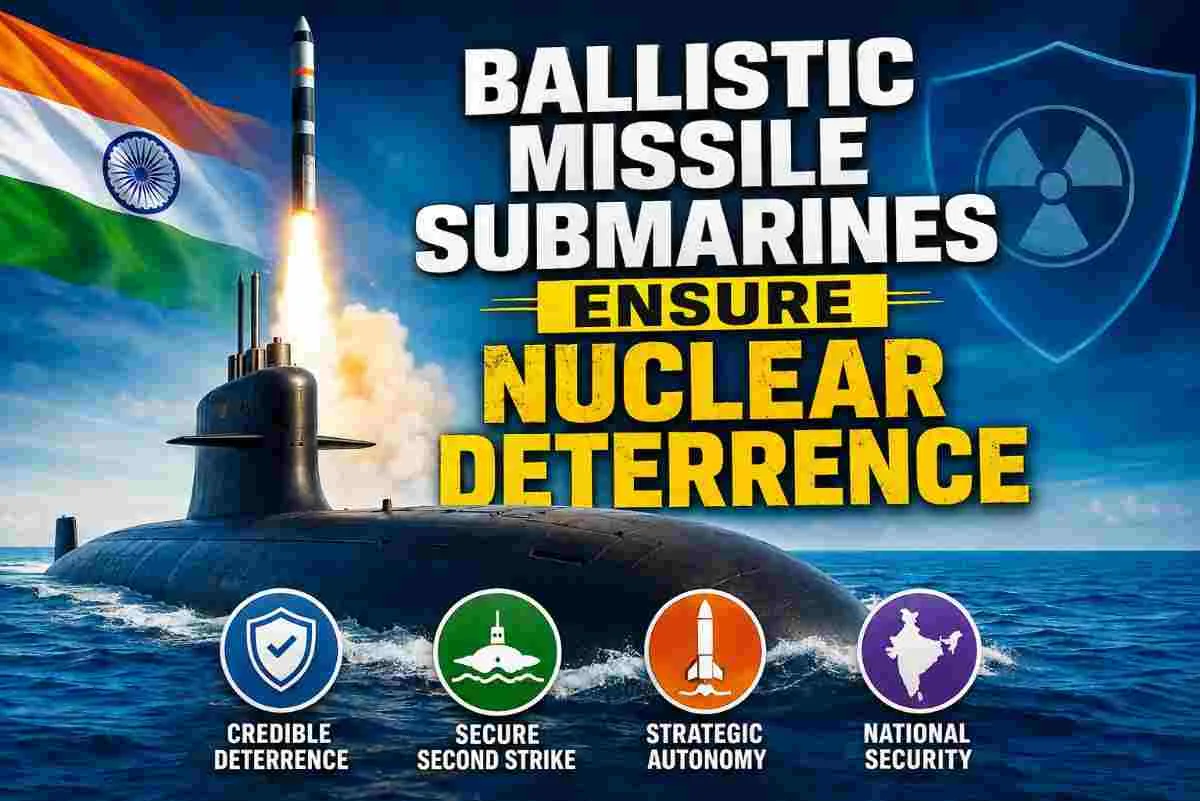
K-6 – Range: 8,000–9,000 km, with MIRV capability. Intended for the future S5-class submarines. Status: In development.
Global SSBN Programs
-
USA – Currently operates 14 Ohio-class submarines. Its future program is the Columbia-class, expected in the 2030s, armed with the Trident II D5 missile (range: 12,000 km).
-
Russia – Current fleet includes Borei-class and Delta-IV submarines, with new builds planned for the future. They are equipped with the Bulava missile, which has a range of 8,300–9,000 km.
-
China – Currently fields the Type 094 (Jin-class) submarines. The next-generation Type 096 is under development, and the fleet is armed with JL-2 and JL-3 missiles, both with a range of 12,000 km.
-
UK – Operates 4 Vanguard-class submarines, set to be replaced by the Dreadnought-class in the 2030s. The missile system used is the Trident II D5.
-
France – Currently has 4 Triomphant-class submarines, with the future SNLE 3G program expected around 2035. These carry the M51 missile, which has a range of 8,000–10,000 km.
-
India – Currently operates the Arihant-class submarines. The future S5-class is planned, and the missile arsenal includes the K-4, K-5, and K-6 systems.
Key Concepts Explained
MIRV (Multiple Independently Targetable Reentry Vehicles): One missile can strike multiple targets. This increases penetration capability against missile defence.
CASD (Continuous At-Sea Deterrent): At least one SSBN is always on patrol. Ensures retaliation capability.
Bastion Strategy: Keeping SSBNs in heavily defended near-home waters to increase survivability.
NFU (No First Use): India's declared policy – will not use nuclear weapons first. SSBNs ensure credible second strike.
Recent Context
August 2026: China completed dredging and land reclamation at Antelope Reef in the Paracel Islands. Creates a larger platform with port-like features. Analysts see it as part of South China Sea military buildup with possible support for maritime deterrence.
Rare Facts for Prelims
-
Arihant meaning: Linked to the concept of destroying enemies; central to India's second-strike posture.
-
SSBN vs SSN: SSBNs = deterrence & missile launch; SSNs = hunting submarines & ships.
-
CASD: At least one SSBN always on patrol.
-
MIRV: One missile strikes multiple targets.
-
Bastion strategy: Keeping SSBNs in heavily defended near-home waters.
Exam-Focused Points :
-
Nuclear Triad: Land-based missiles, strategic bombers, sea-based SSBNs.
-
Most Survivable Leg: Sea-based SSBNs – hidden deep in the ocean.
-
India's SSBNs: Arihant (2016), Arighaat (2024), Aridhaman (trials), S4*.
-
K-Missiles: K-15 (750 km), K-4 (3,500 km), K-5 (5,000-6,000 km), K-6 (8,000-9,000 km MIRV).
-
S5-Class: 13,500 tonnes, 190 MW reactor, 12-16 VLS for ICBMs with MIRV.
-
Project 77: Six indigenous SSNs, 10,000 tonnes, 24-cell VLS.
-
NFU Policy: India's No First Use policy – SSBNs ensure credible second strike.
FAQs :
Q1: What is the nuclear triad?
Three delivery systems: land-based ballistic missiles, strategic bombers, and sea-based submarines (SSBNs).
Q2: Which leg of the triad is most survivable?
The sea-based leg – SSBNs are hidden in the ocean and hard to track.
Q3: What is India's No First Use (NFU) policy?
India will not use nuclear weapons first. SSBNs ensure a credible second-strike capability.
Q4: What is the K-4 missile?
A 3,500 km range submarine-launched ballistic missile deployed on INS Aridhaman.
Q5: What is MIRV?
Multiple Independently Targetable Reentry Vehicles – one missile strikes multiple targets.
Month: Current Affairs - Aug 26, 2026
Category: Nuclear Deterrence