Habitat Connectivity Boost in Brahmaputra Floodplains with New Forest Plan
The Assam government has proposed a new Reserved Forest near Bura Chapori Wildlife Sanctuary to strengthen habitat connectivity and conservation in the ecologically sensitive Brahmaputra floodplain region.
Location and Ecological Setting
Bura Chapori Wildlife Sanctuary lies along the southern bank of the Brahmaputra River in Assam. It forms part of the Laokhowa–Burachapori ecosystem, a key floodplain habitat. Strategically positioned, it connects Kaziranga National Park in the east and Orang National Park in the west, with Laokhowa Wildlife Sanctuary to the south, making it a crucial wildlife corridor.
Climate and Vegetation
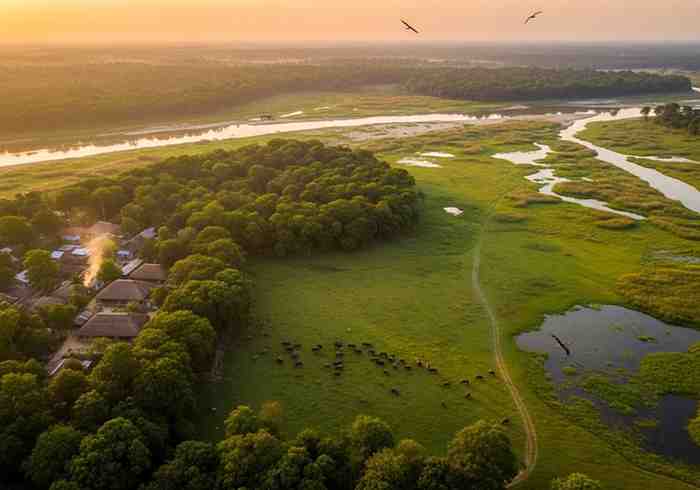
The region experiences a sub-tropical monsoon climate with heavy rainfall and seasonal flooding. Vegetation is diverse, including wet alluvial grasslands, riparian forests, and semi-evergreen forests. The landscape is interspersed with wetlands and river channels, supporting rich biodiversity. Key plant species include Hollong, Mekai, Nahar, Dhuna, Udiyam, and Samkothal.
Rich Faunal Diversity
The sanctuary hosts significant wildlife populations such as the Indian rhinoceros, tiger, leopard, wild buffalo, elephants, and hog deer. It is also an important bird habitat, supporting endangered species like the Bengal Florican and Black-necked Stork, along with migratory birds such as Mallard, Teal, and Whistling Duck.
Significance of Proposed Reserved Forest
The creation of a new Reserved Forest aims to reduce habitat fragmentation and improve ecological connectivity across protected areas. It will facilitate safe wildlife movement, enhance genetic exchange, and strengthen conservation efforts in the Brahmaputra floodplain, which faces increasing pressure from human activities and environmental changes.
Exam-Focused Points
-
Location: South bank of Brahmaputra River, Assam
-
Ecosystem: Laokhowa–Burachapori floodplain system
-
Connectivity: Kaziranga – Orang – Laokhowa corridor
-
Habitat: Alluvial grasslands, wetlands, riparian forests
-
Key species: One-horned rhinoceros, Bengal Florican
-
Objective: Reduce fragmentation & improve wildlife movement
Month: Current Affairs - March 24, 2026
Category: Environment, Biodiversity