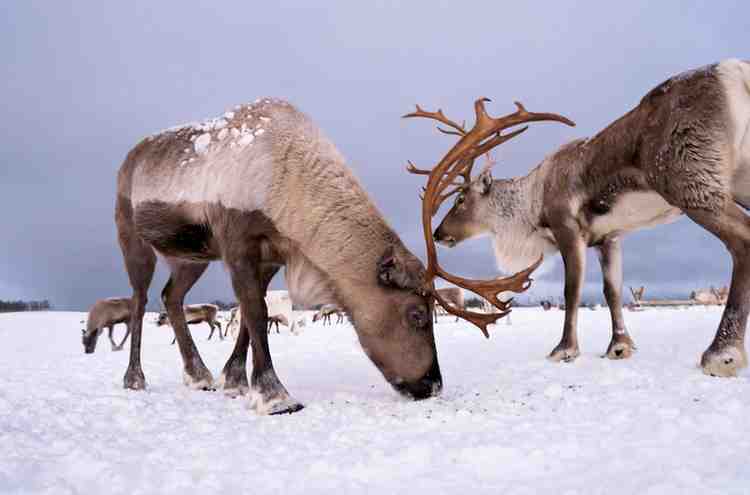
A quiet but serious shift is unfolding in the Arctic. Caribou, one of the region’s most resilient species, are facing a winter survival problem not because of predators, but because their primary food source is disappearing . Lichen, which sustains them through the coldest months, is declining due to warming temperatures and changing snow conditions.
This is not just about one species. It signals stress across the Arctic ecosystem.
The Species in Focus: Caribou
-
Scientific name: Rangifer tarandus
-
Family: Cervidae (deer family)
-
Known as reindeer in Europe and Asia
-
Found across Greenland, Canada, Alaska, Russia, and Scandinavia
Caribou are foundational to Arctic ecology and deeply tied to indigenous livelihoods. Their movement patterns shape vegetation cycles, and they serve as prey for large predators.
Built for Extreme Survival
Caribou are engineered for cold environments in ways that go beyond thick fur.
Physiological Adaptations
-
Nasal turbinate system : Warms freezing air before it reaches the lungs, reducing heat loss
-
Ultraviolet vision : Allows detection of food and predators against reflective snow
-
Dense, hollow fur : Provides insulation and buoyancy (they’re strong swimmers too)
Rare Traits
Winter Survival Strategy: “Cratering”

During winter, vegetation is buried under snow. Caribou rely on a behaviour called cratering :
-
They dig through snow using hooves and antlers
-
Reach lichen , a slow-growing organism that acts as their main winter fuel
Here’s the problem:
Climate change is altering snow structure. Warmer temperatures create hard ice crusts , making it much harder to dig. Even if lichen exists below, it becomes inaccessible.
Why Lichen Matters So Much
Lichen is not just “food,” it is a lifeline :
-
High in carbohydrates, crucial for energy in winter
-
Available when other plants are not
-
Can be digested by very few animals, giving caribou a niche advantage
However, lichen grows extremely slowly. Once degraded, it can take decades to recover .
Month: Current Affairs - April 12, 2026
Category: Species in Focus