Rare Archaeological Find from Pre-Hispanic Mesoamerica
Archaeologists in southern Mexico have uncovered an exceptionally well-preserved 1,400-year-old tomb belonging to the Zapotec civilization , shedding new light on Indigenous burial practices and belief systems. The discovery was made in 2025 at San Pablo Huitzo , located in the state of Oaxaca , following an investigation triggered by an anonymous tip-off about illegal excavation activity.
Historical Background of the Zapotecs
The tomb has been dated to around A.D. 600 , a phase when Zapotec society was politically and culturally influential in the Oaxaca Valley. The civilisation emerged around 700 B.C. and survived for more than two millennia until the Spanish conquest in 1521 . Notably, Zapotec-speaking communities continue to thrive today, making them one of Mexico’s largest Indigenous groups.
Symbolic Owl Sculpture
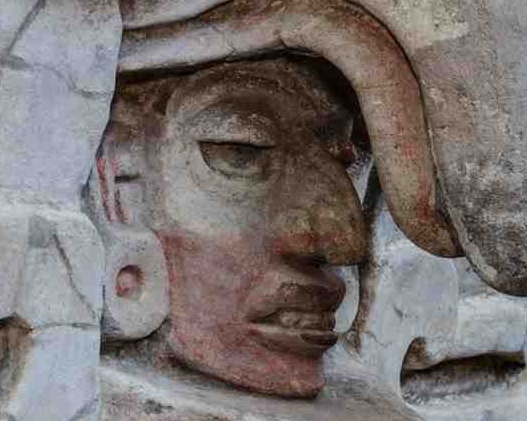
At the tomb’s entrance, researchers found a large carved owl with pronounced eyes. The owl’s beak opens to reveal a painted human face, believed to represent a Zapotec elite or ancestor. In Zapotec cosmology, owls were associated with death, authority, and the afterlife , suggesting the individual buried here held high ritual or social status.
Calendrical Inscriptions and Murals
Inside the structure, a stone doorway divides the tomb into two chambers. The lintel above the doorway bears calendrical glyphs , part of a Zapotec naming system that linked individuals to specific birth dates and deities. Carved male and female figures flank the entrance, possibly symbolising ancestral guardians.
The inner burial chamber preserves striking wall paintings in white, red, green, and blue , depicting a funerary procession. Figures are shown carrying bags of copal resin , an aromatic substance widely used in ceremonial offerings across ancient Mesoamerica.
Archaeological Importance and Conservation
Mexican heritage authorities have described the Huitzo tomb as the most important archaeological discovery in the country in nearly a decade , primarily due to its intact sculptures and murals. An interdisciplinary team of archaeologists, conservators, and bioanthropologists is currently working to stabilise the site and analyse ceramics, iconography, and human remains recovered from the tomb.
The findings are expected to significantly enhance scholarly understanding of Zapotec funerary customs, social hierarchy, and ritual symbolism .
Exam-Focused Key Points
-
Zapotec civilisation flourished in the Oaxaca Valley from around 700 B.C.
-
Tomb dates to approximately A.D. 600
-
Owls symbolised death and authority in Zapotec belief
-
Calendrical names linked individuals to birth dates and deities
-
Copal resin was used as incense in pre-Hispanic rituals
Month: Current Affairs - February 02, 2026
Category: Ancient Civilisations | Art & Culture