MIT Study Finds Chemical Fossils of Early Animals in Precambrian Rocks
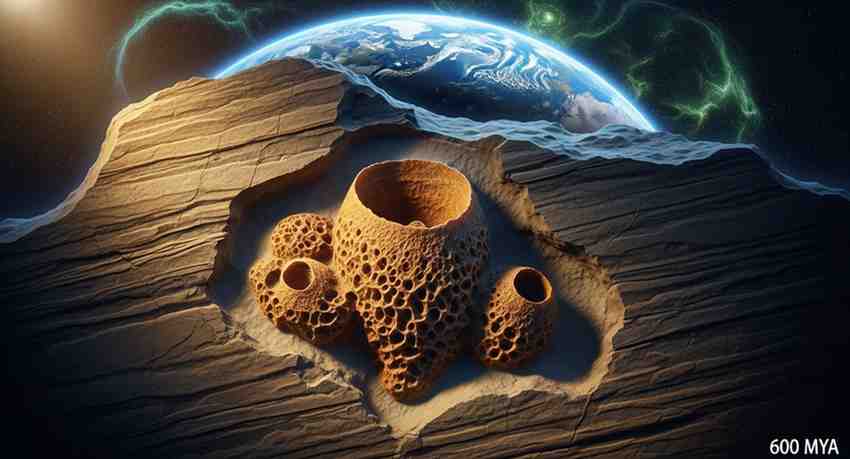
Scientists have discovered evidence of some of the earliest animal life on Earth in rocks older than 541 million years. The research suggests that primitive sea sponges may have existed before the well-known diversification of animals during the Cambrian Explosion. These findings indicate that essential biological traits found in modern sponges were already present in ancient marine organisms.
Chemical Evidence in Ancient Rocks
Researchers from the Massachusetts Institute of Technology analysed Precambrian rock samples and identified molecular fossils called steranes. The results were published in the Proceedings of the National Academy of Sciences.
Steranes originate from sterols, key components of eukaryotic cell membranes. Their presence in rocks dating close to the Cambrian boundary suggests that complex, nucleus-bearing organisms existed earlier than previously believed. The analysis indicates that these early life forms inhabited oceans with relatively low oxygen levels.
Demosponges and Molecular Signatures
A significant aspect of the study was the detection of rare 30-carbon steranes. These compounds are closely associated with demosponges, a group of marine sponges still widespread today. Such molecular signatures are not known to be produced by bacteria or simpler organisms.
To confirm the origin of these biomarkers, scientists conducted laboratory simulations by exposing sterols from modern sponges to heat and pressure similar to geological conditions. The resulting molecular patterns matched those found in the ancient rocks, reinforcing the interpretation that these traces belong to early sponge ancestors.
Evolutionary Implications
The discovery suggests that the origins of animal life extend deeper into the Precambrian period than previously recognised. Early animals were likely soft-bodied and lacked hard skeletal structures, which explains why they are rarely preserved as conventional fossils.
Important Facts for Exams
-
The Cambrian explosion occurred about 541 million years ago.
-
Steranes are molecular fossils derived from sterols in eukaryotic membranes.
-
Demosponges represent one of the oldest surviving animal lineages.
-
The Precambrian covers nearly 88% of Earth’s geological history.
The study highlights how chemical fossil analysis can reveal hidden chapters of biological evolution, offering new insights into the earliest stages of complex life on Earth.
Month: Current Affairs - March 04, 2026
Category: Evolution | Paleontology