Overview
The Netherlands has returned the 11th-century Anaimangalam Copper Plates to India. These plates are also called the Leiden Plates. They were handed over during the Prime Minister’s recent visit to the Netherlands. The plates belong to the Chola Empire. They give valuable information about maritime trade, religious tolerance, and cultural exchange between India and Southeast Asia.
What Are the Anaimangalam Copper Plates?
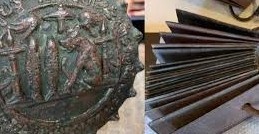
The Anaimangalam Copper Plates are old inscriptions from the Chola period. They date back to the 11th century. The collection has 21 copper plates . They weigh about 30 kg in total. A bronze ring holds them together. The ring has the royal seal of King Rajendra Chola I.
Languages and Sections
The plates are divided into two parts:
| Section |
Language |
Content |
| First few plates |
Sanskrit |
Genealogy (family tree) of Chola rulers and their link to mythological figures |
| Most plates |
Tamil |
Administrative details and land grant records |
What Do the Tamil Plates Record?
The Tamil section describes a grant given by King Rajaraja Chola I (who ruled from 985 to 1014 CE). He gave land revenues and taxes to a Buddhist monastery. The monastery was called Chudamani Vihara . It was located in Nagapattinam (Tamil Nadu).
The monastery was built by Sri Mara Vijayotunga Varman . He was the ruler of the Srivijaya kingdom (present-day Indonesia). Later, Rajaraja’s son, Emperor Rajendra Chola I , had the order engraved on copper plates to preserve it.
Why Are These Plates Important?
The plates give us rare insights into:
-
Maritime links between South India and Southeast Asia
-
Religious pluralism – a Chola king donating to a Buddhist monastery
-
Cultural exchanges during the peak of the Chola period
How Did the Plates Go to the Netherlands?
Around the year 1700 , a Dutch missionary named Florentius Camper got the plates. At that time, the Dutch East India Company controlled Nagapattinam. Later, the plates reached Leiden University Library in the Netherlands. Scholars studied them there, but the public could not see them easily.
Return to India
During the Prime Minister’s recent visit to the Netherlands, the Dutch government returned the plates to India. This is a big victory for India’s cultural heritage.
Exam-Focused Points
-
The Anaimangalam Copper Plates are also called the Leiden Plates .
-
They belong to the 11th century and the Chola Empire .
-
Total plates: 21 ; total weight: 30 kg .
-
Held together by a bronze ring with the seal of Rajendra Chola I .
-
Sanskrit section contains Chola genealogy and mythological links.
-
Tamil section records land grant to Chudamani Vihara (Buddhist monastery in Nagapattinam).
-
The monastery was built by a Srivijaya king (from present-day Indonesia).
-
The grant was made by Rajaraja Chola I (985–1014 CE).
-
Engraved on plates by his son Rajendra Chola I .
-
The plates were taken by Dutch missionary Florentius Camper around 1700.
-
They were kept at Leiden University Library , Netherlands.
-
The Netherlands returned them during the Prime Minister’s recent visit .
Frequently Asked Questions (FAQ)
Q1: What are the Anaimangalam Copper Plates?
A: They are 11th-century inscriptions from the Chola Empire, written on copper plates.
Q2: Why are they also called the Leiden Plates?
A: Because they were kept at Leiden University Library in the Netherlands for many years.
Q3: How many plates are there in the collection?
A: There are 21 copper plates in total.
Q4: What does the Sanskrit section of the plates contain?
A: It contains the family tree (genealogy) of Chola rulers and their links to mythological figures.
Q5: What does the Tamil section mainly record?
A: It records administrative details and a land grant given to a Buddhist monastery in Nagapattinam.
Month: Current Affairs - May 18, 2026
Category: Anaimangalam Copper Plates