| Position |
Who Holds It |
| Chairman |
Union Home Minister (Amit Shah for all councils) |
| Vice‑Chairman |
Chief Ministers of states in the zone, by rotation (one year each) |
| Members |
Chief Minister + 2 other ministers from each state; also 2 members from Union Territories in the zone |
| Advisers |
One person nominated by NITI Aayog (earlier Planning Commission) |
This ensures all states and Union Territories have a voice.
Why Is Jagdalpur Special?
Jagdalpur is in the Bastar region. Bastar has seen Naxal activity for many years. Amit Shah’s visit also focused on anti‑Naxal development, tribal welfare plans, and turning security camps into public service centres. This shows that the government is working on both safety and development together.
Exam-Focused Points
-
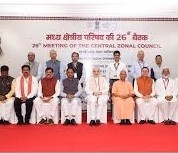
Central Zonal Council meeting held in Jagdalpur, Chhattisgarh .
-
Chaired by Union Home Minister Amit Shah .
-
Attending states: Chhattisgarh, Madhya Pradesh, Uttar Pradesh, Uttarakhand .
-
Zonal Councils established under States Reorganisation Act, 1956 .
-
They are statutory (not constitutional) bodies.
-
Five Zonal Councils (Northern, Central, Eastern, Western, Southern).
-
North‑Eastern states are not part of these councils.
-
Chairman: Union Home Minister.
-
Vice‑Chairman: Chief Ministers (rotating every year).
-
Advisers: One from NITI Aayog .
FAQ
Q1: Who chaired the Central Zonal Council meeting in Jagdalpur?
A: Union Home Minister Amit Shah.
Q2: Which four states attended the meeting?
A: Chhattisgarh, Madhya Pradesh, Uttar Pradesh, and Uttarakhand.
Q3: Under which Act were Zonal Councils formed?
A: The States Reorganisation Act, 1956.
Q4: How many Zonal Councils are there in India?
A: Five.
Q5: Who is the Vice‑Chairman of a Zonal Council?
A: The Chief Ministers of the states in that zone, by rotation for one year.
Month: Current Affairs - May 20, 2026
Category: Inter State Cooperation