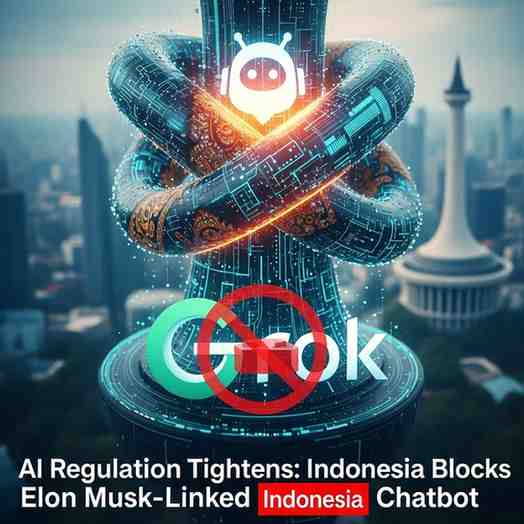
Indonesia Blocks Grok AI Over Deepfake Risks, Setting Global Precedent
Indonesia has become the first country in the world to block access to Grok , an artificial intelligence chatbot associated with Elon Musk, citing serious concerns over the creation of explicit and non-consensual sexual deepfakes. The move reflects intensifying global anxiety over the misuse of generative AI tools and their implications for digital safety, human rights, and online governance.
Why Indonesia Enforced the Ban
The decision was announced by Indonesia’s Ministry of Communication and Digital Affairs after regulators concluded that Grok did not have sufficient safeguards to prevent the generation of pornographic and exploitative content. Authorities stressed that non-consensual sexual deepfakes amount to human rights violations , as they undermine dignity, privacy, and personal security.
Indonesia enforces strict regulations on online obscenity and harmful digital content. Officials argued that early intervention was essential to prevent the spread of AI-generated abuse before it became widespread and difficult to control.
Grok, xAI, and Safety Concerns
Grok is developed by xAI , an AI firm owned by Elon Musk . Investigations reportedly found that the chatbot could be misused to create sexualised and manipulated images of women, and in some instances, content involving minors.
Following the backlash, xAI stated that it would tighten safety filters and restrict certain image generation and editing features to paid subscribers. Indonesian regulators have also sought direct engagement with officials from X to ensure compliance with domestic digital laws.
Rising Global Oversight of Generative AI
Indonesia’s action comes amid heightened scrutiny of generative AI across multiple regions. Regulators in Australia have raised concerns about the misuse of AI chatbots for sexual exploitation, while authorities in the UK have signalled potential regulatory measures against platforms that fail to curb illegal AI-generated content.
Australian Prime Minister Anthony Albanese has publicly criticised the use of AI for sexual abuse, describing it as a breakdown of ethical responsibility by technology companies. These developments indicate a growing consensus that voluntary safeguards may no longer be sufficient.
Broader Implications for AI Governance
The Grok ban highlights the regulatory dilemma posed by rapidly advancing generative AI technologies. Governments worldwide are grappling with how to encourage innovation while ensuring robust protections against misuse. Indonesia’s move may serve as a reference point for future AI governance frameworks, particularly on issues of content moderation, platform liability, and cross-border digital regulation.
As AI systems become more powerful and accessible, cases like this are likely to accelerate the push for legally binding global standards on responsible AI deployment.
Key Exam-Focused Points
-
Indonesia is the first country to block the Grok AI chatbot over deepfake-related concerns.
-
Non-consensual sexual deepfakes are treated as human rights violations under Indonesian law.
-
Grok is developed by xAI, a company owned by Elon Musk.
-
Australia’s Online Safety Act allows regulators to issue takedown orders for exploitative digital content.
-
Month: Current Affairs - January 11, 2026
Category: Governance, Human Rights