Ancient Horse DNA Found in German Sediments Challenges Preservation Theory
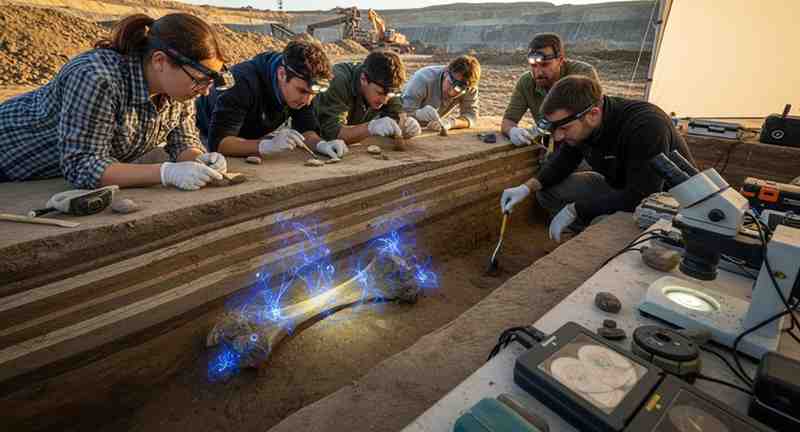
Scientists have identified genetic material nearly 200,000 years old at the Schöningen archaeological site in Lower Saxony, Germany. The discovery challenges the long-held belief that extremely old DNA can survive only in frozen or cave environments. Researchers found that the genetic material remained preserved in open-air sediments exposed to varying climatic conditions for thousands of years. The findings were published in the scientific journal Nature Ecology and Evolution.
Significance of the Schöningen Site
The Schöningen site is globally recognised for its remarkable prehistoric discoveries. It gained prominence after archaeologists uncovered the famous Schöningen Spears, which date back roughly 300,000 years and represent some of the oldest known hunting tools used by early humans.
Excavations in the region have also revealed lake sediments containing fossilised animal remains, particularly horses. During recent research, scientists extracted DNA from these ancient horse fossils preserved within the sediments.
DNA From an Extinct Horse Species
Genetic analysis revealed that the DNA belonged to Equus mosbachensis, a species that lived during the Middle Pleistocene epoch. This horse is considered an important evolutionary ancestor within the lineage of modern equine species.
Comparative genomic studies suggest that this species diverged from other horse lineages around 800,000–900,000 years ago. By studying the recovered genetic sequence, researchers were able to gain insights into prehistoric horse evolution across Eurasia.
Preservation in Temperate Sediments
Most of the oldest DNA samples previously discovered have come from permafrost regions such as Siberia, where freezing temperatures slow down biological decomposition. The Schöningen discovery is unusual because the DNA survived in a temperate, non-frozen environment.
Scientists believe that special chemical conditions within the sediments helped preserve the genetic material. The burial layers were rich in carbonate minerals and contained very low oxygen levels, creating an anaerobic environment that reduced microbial decay. These mineral-rich sediments likely stabilised DNA fragments and slowed their degradation.
Important Facts for Exams
-
Schöningen in Germany is famous for 300,000-year-old wooden hunting spears.
-
Equus mosbachensis lived during the Middle Pleistocene epoch.
-
Permafrost environments have traditionally preserved the oldest ancient DNA samples.
-
Anaerobic environments with low oxygen can slow microbial decomposition.
Implications for Future Research
The discovery expands the possibilities for ancient DNA research beyond frozen environments. If DNA can survive for hundreds of thousands of years in temperate sediments, many archaeological sites previously considered unsuitable for genetic studies may contain valuable biological evidence.
Such findings could help scientists reconstruct prehistoric ecosystems and evolutionary histories using genetic data, complementing traditional fossil analysis and significantly broadening the scope of palaeogenetic research.
Month: Current Affairs - March 05, 2026
Category: Archaeology | Evolution