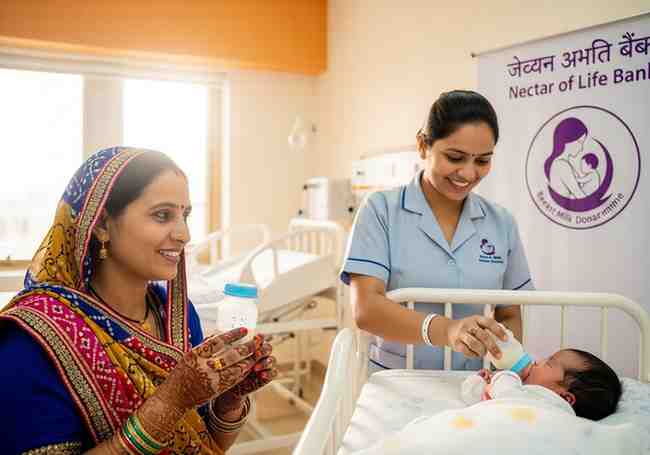
Babies helped by Barmer bank: 3,165 newborns
Yashoda mothers registered at Barmer: 3,523 women
Storage temperature: Minus 19 degrees Celsius
Maximum storage time: Up to six months
Screening done before use: HIV and other infection tests
Jeevan Dhara inauguration: 27 March 2015 in Jaipur
Jeevan Dhara is: Rajasthan’s first state-run human milk bank
Yashoda programme started: 2008 under Norway-India Partnership Initiative
Bhilwara donor Raksha Jain: Donated 160.81 litres, supported over 5,000 feeds
FAQ
Q1: Who can donate breast milk?
A: Healthy mothers who have extra milk. They must pass health tests. Their blood should be free from HIV and other infections.
Q2: Is donated milk safe for babies?
A: Yes. The milk is tested, pasteurized, and stored at very cold temperatures. Only safe milk is given to newborns.
Q3: Why do some babies need donated milk?
A: Their own mother may be sick, on medicine, or unable to produce milk. Premature babies also need donated milk often.
Q4: How long can a milk bank store donated milk?
A: Up to six months if kept at minus 19 degrees Celsius.
Q5: What is the Norway-India Partnership Initiative?
A: It is a joint programme between Norway and India. It helps improve mother and child health. The Yashoda programme runs under it.
Q6: Is this topic asked in exams?
A: Yes. Nursing exams, medical entrance tests, and Rajasthan state exams may ask about milk banks, storage temperature, and key dates.
Month: Current Affairs - May 11, 2026
Category: YashodaProgramme