Shockwaves from Airstrikes Damage Historic Monuments in Iran
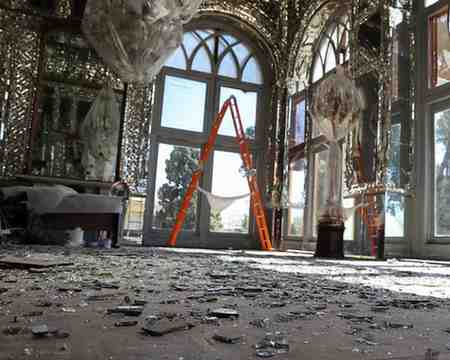
Several historic monuments and UNESCO-listed heritage sites in Iran have reportedly suffered damage following recent military strikes attributed to the United States and Israel . Although the missiles did not directly hit the cultural landmarks, shockwaves from nearby explosions and falling debris damaged fragile architectural features such as glass windows, decorative tiles and stone structures.
Damage to UNESCO Heritage Sites
According to the UNESCO , at least four culturally significant locations were affected by the nearby blasts. Among them is the Golestan Palace in Tehran , a Qajar-era palace complex known for its elaborate mirror halls, intricate tilework and landscaped gardens.
Reports indicate that shockwaves shattered glass windows, damaged archways and cracked sections of the palace’s famous mirrored ceilings.
Historic Monuments Also Affected
Other monuments reportedly affected include the Chehel Sotoun Palace , a 17th-century structure famous for its Persian garden layout and grand audience hall. Another site experiencing damage is the Masjed-e Jame of Isfahan , one of the oldest mosques in the country and an important example of evolving Persian Islamic architecture spanning over a thousand years.
Impact Near Khorramabad Valley
Authorities also reported structural disturbances near the Khorramabad Valley , an important archaeological region containing prehistoric caves and rock shelters. These sites provide evidence of human habitation dating back to nearly 63,000 BC , making the area one of the most significant prehistoric research zones in western Iran.
International Concern Over Cultural Heritage
The reported damage has raised global concern regarding the vulnerability of cultural heritage during armed conflicts. A spokesperson for the United Nations noted that civilians and cultural infrastructure often suffer the greatest losses during warfare.
Iranian authorities criticised the damage and accused Israel of targeting symbols of national heritage. Meanwhile, UNESCO stated that it had earlier shared the geographical coordinates of protected heritage sites with all parties to minimise risks during military operations.
Risks to Cultural Heritage in Modern Warfare
Experts warn that modern weapons and large-scale bombing campaigns increasingly threaten historical sites. Even when monuments are not directly targeted, powerful shockwaves and falling debris can cause severe structural damage to delicate historical buildings.
Iran currently has nearly 30 UNESCO World Heritage Sites , and preservation authorities are assessing the extent of the damage while exploring restoration measures to protect these irreplaceable cultural landmarks.
Exam-Focused Points
-
UNESCO designates World Heritage Sites for their cultural or natural importance.
-
Golestan Palace is a Qajar-era palace complex in Tehran.
-
Chehel Sotoun Palace reflects Safavid architectural style and Persian garden design .
-
Masjed-e Jame of Isfahan shows over a millennium of Islamic architectural evolution .
Month: Current Affairs - March 14, 2026
Category: Art & Culture