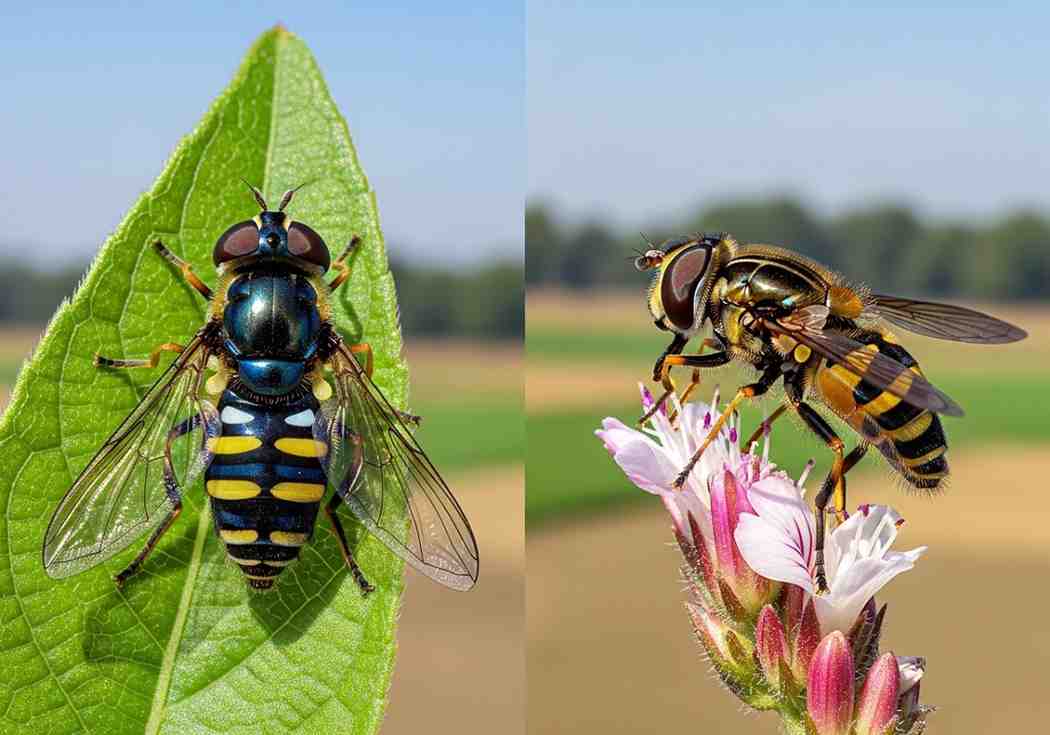
Adult role: Pollinators of wild and cultivated plants
Larval role (rat-tailed maggots): Decompose organic matter in water, recycle nutrients
Size of adult hoverflies: 4-10 mm long
Hoverflies do not sting (harmless to humans)
Frequently Asked Questions (FAQ)
Q1: What are the names of the two new hoverfly species?
A: They are Eristalinus sapphirinus and Eristalinus brunettii .
Q2: Where were these hoverflies found?
A: They were discovered in the Gangetic Plains of West Bengal, India.
Q3: Why is one species called sapphirinus ?
A: Because it has a beautiful sapphire-blue metallic colour on its body.
Q4: Who was Eristalinus brunettii named after?
A: It was named after Enrico Adelelmo Brunetti, an entomologist who studied Indian flies (Diptera) and made important contributions.
Q5: Why are hoverflies important for the environment?
A: As adults, they pollinate flowers and crops. As larvae, they live in water and eat decaying matter, recycling nutrients. They help both plants and water bodies.
Month: Current Affairs - Jun 04, 2026
Category: NewHoverflySpecies