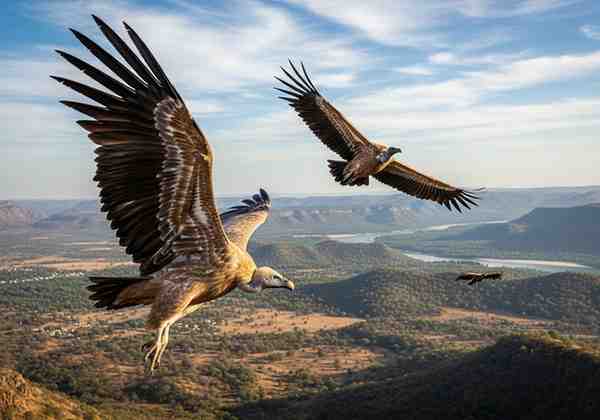
CONSERVATION STATUS
The Indian vulture is listed as Critically Endangered on the IUCN Red List. This is the highest risk category before extinction.
KEY FACTS ABOUT MELGHAT TIGER RESERVE
Since the vultures were released here, let us understand this place:
-
Location: Amravati district, Maharashtra
-
Position: On the southern offshoot of the Satpura Hill Range (also called Gavilgarh Hills)
-
Meaning of Melghat: “Meeting of the ghats”
-
Special fact: First tiger reserve in Maharashtra
-
River: Tapti River flows along its northeastern boundary
-
Five tributaries: Khandu, Khapra, Sipna, Gadga, and Dolar
-
Major tribe: Korkus
-
Forest type: Tropical dry deciduous
-
Main trees: Teak, Ain, Haldu, Bamboo
-
Animals found: Sloth Bear, Indian Gaur, Sambar, Leopard, Nilgai, Dhole, Hyena, Jungle Cat, Langur
-
Special bird: Critically endangered forest owlet – Melghat is a stronghold for it
FAQ (FREQUENTLY ASKED QUESTIONS)
Q1: What is the scientific name of the Indian vulture?
A: Gyps indicus .
Q2: In which countries is the Indian vulture found naturally?
A: India, Pakistan, and Nepal.
Q3: What type of habitat does the Indian vulture prefer?
A: Savannas and open habitats near villages, cities, and cultivated areas.
Q4: What caused the huge decline in the Indian vulture population?
A: Poisoning from the veterinary drug diclofenac, which was given to cattle.
Q5: What is the current IUCN status of the Indian vulture?
A: Critically Endangered.
EXAM-FOCUSED POINTS
-
News: Two Indian vultures flew from Melghat Tiger Reserve (Maharashtra) to near Bhopal (Madhya Pradesh) – distance over 1,000 km
-
Scientific name: Gyps indicus
-
Common name: Long-billed vulture
-
Family: Accipitridae (eagles and hawks group)
-
Native countries: India, Pakistan, Nepal
-
Population decline: 97–99%
-
Main threat: Diclofenac (veterinary drug) – causes kidney failure
-
Month: Current Affairs - May 12, 2026
Category: IndianVulture